Another Year in Review post, this one covering the cinematic releases I managed to catch in 2018.
I'll start with the Marvel trio of Black Panther, Avengers: Infinity War and Ant-man and the Wasp. Another three slickly produced and well made blockbusters, demonstrating how good the Disney-owned Marvel movie factory actually is. Black Panther nails the origins story, Infinity War brings the Thanos story line along nicely and Ant-man 2 gives us more character background and a chance to see CGI Michael Douglas as a young man again. And yes, it's still a little freaky! Each ties in with the on-going narrative that Marvel started all those many films ago (the original Iron Man - it feels like an age since that first came out) and whilst each was successful at the Box Office (especially Black Panther - $1.34 billion for effectively an origin story is tremendous), I think the steam is running out of the series.
Let me explain. Black Panther gave us the origin story of the character and one of the best secondary villains in a Marvel film (Andy Serkis showing that he's more than just a bloke in a mo-cap suit), so far, so good. The thing is it's only the second of the origin films (from Iron Man, Thor, Captain America, Ant-Man, Dr Strange and even Guardians of the Galaxy), that's been great in every respect. Spiderman - Homecoming is about equal here. We have another origins movie next year, Captain Marvel that, when I saw the first trailer, I thought it looked decent. Then the second trailer dropped and I found I couldn't care less. Maybe it's just me, but once we get the Infinity Wars story line finished in Avengers: Endgame, I'm not sure how much more effort I want to put into these films. Another by the book origins story with an overly CGI'd final battle and character redemption is not something I really want to see again. That's been done already. I could be wrong, but at it's current standing, Captain Marvel might be the Marvel film that hits "Peak Superhero" for me.
Of course, whilst fans will say it's great bringing new characters and new story lines in, it's all just about the Benjamins and I am increasingly cynical about Disney. They bought Marvel and have so far managed a frankly embarrassing high level of quality releases. That surely can't continue forever? They bought Star Wars and have pretty much ridden that one into the ground - I would like to see Episode 9 to see how the story ends but that's about it. Now they have the 20th Century Fox-held Marvel licence, so that's the X-Men, Fantastic Four and Deadpool. Lord knows what the conservatively minded studio execs will do with the Merc with a mouth.
Speaking of him, Deadpool 2 saw a sequel that, while it didn't hit the heights of the first film, provided a worthy and fun follow up. Yup, they pushed the boundaries with the humour again, but that's what makes Deadpool quite refreshing. Of course, the success of this one means calls for a third but I'm in two minds about this and even Ryan Reynolds has been honest about saying unless there is a good story, they're willing to leave well alone. As I said above, who knows what Disney will do with the franchise.
The final superhero (or anti-hero) movie is Venom. Nominally part of the Spider-verse that Sony holds the rights to, Venom had some challenges to overcome, with both production fights and questions as to whether Sony could produce a decent superhero movie since the last decent one they made, Spiderman 2 in 2004. Well, they produced a corker, most of which I am crediting to Tom Hardy who once again demonstrates his ability to put 100% into any project he's involved with. A serviceable story, coupled with all-round good performances and a decent line in humour, the only thing that detracts from Venom is the CGI-fest finale, but that's a staple now of the genre. Feeling more fresh that Deadpool 2 and less "manufactured" than the Marvel series, Venom was the superhero film of the year for me.
On to what can only be described as the most unnecessary sequel ever produced (unless you are the studio execs who saw the first film take $1.67 billion worldwide), Jurassic World: Fallen Kingdom was advertised as a new adventure and ended up being a bit of a re-tread with an oddly small-scale third act. That didn't harm its box office success too much, raking in $1.3 billion and more than justifying a third film in the Jurassic World series. And that's the disappointing thing here - Fallen Kingdom exists merely to bridge the gap. The story is lazy, the actors look bored and it's likely the film will be remembered only as something you have to watch to keep up with the story. The worry here is that the third film will suffer from the same malaise that has gripped the second. Time will tell.
Before I get to my final film, a quick note about The Greatest Showman. The Hugh Jackman-starring musical loosely based on PT Barnum (loosely based is about the right level to describe this movie - there is a guy called Barnum and he had a circus - the rest is purely for entertainment), is a rip-roaring crowd-pleaser with enough ear-worm songs that you'll be humming them for hours after the end of the movie. My opinion is based purely on the entertainment value of the film, not its historical accuracy and you could do far worse than give up a couple of hours for this.
Right, the final film of the post and it's undoubtedly the best of the films I have seen this year, so much so that we went to see it twice (once at the chain cinema in the MetroCentre and once at the local independent cinema in Consett - you use it or lose it). That film, Mission Impossible: Fallout. Entry number six in a series that started in 1996, MI: Fallout continues the quality trend since MI: Ghost Protocol. With regular cast members back in place (Ving Rhames, Simon Pegg and the seemingly immortal Tom Cruise) plus returning cast from the previous entry MI: Rogue Nation (Alex Baldwin, Rebecca Ferguson and Sean Harris), MI: Fallout also brings in a few nods to the older entries and celebrates the fact that they've been doing this kind of thing for so long. Some might say this entry is a little too long but it never really sags and the action sequences are the best the series has had yet. The HALO jump and the toilet fight scene are two stand outs among the many set pieces. Part of the success is the acknowledgment of Cruise's advancing age and yet he still puts in maximum effort on screen - even to the point they kept the shot from a roof top jump where he breaks his ankle on contact with the side of a building and then hobbles off. That is a tad mental! Mention must also be given to the soundtrack which is simply sublime. People generally take little interest in the music used in action films - this soundtrack will make you sit up and take notice. That this series still feels fresh and exciting after 22 years is very much down to the right production teams, writers, directors and actors and I for one look forward to the inevitable follow up. How Cruise beats the spectacle he's already provided will be the big question. Space, anyone?
That's films out of the way. Let me know what you think of my choices and if there are films you have seen in 2018 that caught your interest. Next up, it'll be videogames.
Saturday, 29 December 2018

Friday, 28 December 2018
Year in Review - Television
The end of another year and a time to reflect a little on what I've been watching on TV in 2018. Not a great deal, to be honest, but there have been a few shows worthy of comment.
Starting off, we have Hard Sun, a so-called pre-apocalyptic thriller that the BBC aired in January. I put up a review post here and to avoid repeating myself, all I'll add is that I was disappointed with the show. It promised much but the execution was lacking.
Next up, the second half of season one for Star Trek: Discovery. I say second half as American broadcasters have this annoying habit of putting months-long break in TV shows instead of showing the whole season in one block. The break didn't hurt ST: Disco as the season ended on a high and delivered what I was expecting from a modern day ST show. The cast were uniformly excellent (especially Jason Isaacs who seems to have been having a ball!), the production values were top notch and the story engrossing. True, some didn't like it as it wasn't "true" to the values of Trek, but I think it mostly was and let's be honest here, if a show doesn't re-invent itself periodically, it disappears into the depressing void of formulaic nothingness. No, Disco was an excellent return to form for TV Trek and I look forward to the second season coming next month.
Another show that re-invented itself for the umpteenth time, Dr Who. I'll address the elephant in the room first - Jodie Whitaker is excellent in the role and the new (or should I say old) vibe of providing educational episodes (where you actually learn a bit about history) is refreshing compared to the convoluted series arcs that the Tennant and Smith era's provided. The three new companions, sorry, friends of the Doctor are worthy additions, especially Bradley Walsh, who gets to show some serious acting chops. One thing this Doctor has mostly avoided is terrible scripting, something that plagued Peter Capaldi's first series, doing much to undermine his great efforts to make the role his own. With a New Year special coming and a second series due at some point, the show has gotten past the kerfuffle about a female Doctor with style and hopefully has a bright future ahead. However, with rumoured issues between Chris Chibnall, the show runner and the BBC, it may be that we only get two series in total.
Another good TV show this year was Jack Ryan. A review of the show is here and that too is another programme I'm looking forward to returning.
The same can be said for Lost in Space, Netflix's re-imagining of the classic sci-fi show. Brought up to date and with vastly superior SFX, Lost in Space had a lot to prove as a flagship show and by God, did it prove it. With an excellent cast (minus the ever-so-slightly annoying Parker Posey as Dr Smith - you really want people to just think about what she's doing and kill her) and a re-jigged story line, Lost in Space provided an excellent counter to Trek and Who for sci-fi fans. It also boasted excellent production values and the pacing over the limited run of episodes was top notch. Again, a second season is due, probably next year.
Marvel TV shows got short shrift from me this year, with only the second season of Luke Cage getting a watch. That show, to be honest, was crap. Too long, too slow and boring, I made my feelings known here. They haven't changed.
This leads me to the Missing In Action section, shows that I haven't seen yet they were released in 2018. First up, the Marvel shows - Daredevil season 3 and Iron Fist season 2. After ploughing through Luke Cage, my lovely lady and I decided that we weren't going to waste any more time on these shows. Yes, Iron Fist season 2 got better reviews than the first, but that wasn't exactly something to shout about, and the third outing for Daredevil was considered a return to form, but when each series takes up to 13 hours of your time, you want to be entertained and they just didn't seem to offer that - and no, this does not break the Magnusson Protocol.
That leaves The Expanse season 3. With a 100% fresh rating on Rottentomatoes.com, this season was one I was really looking forward to appearing on Netflix. Sadly, it didn't. You see, Alcon Entertainment makes the show, with SyFy having first broadcast rights in the US, Amazon having re-broadcast rights in the US and Netflix pretty much covering the rest of the planet. SyFy cancelled the show despite the glowing reviews and obvious quality due to poor ratings - remember, they only have first broadcast rights. Fortunately, Amazon picked up the show for a fourth season, but in doing so, picked up the rights for all broadcasts worldwide. This happened before season 3 made it to the UK. Netflix have since pulled the first two seasons from their network and there is no sign of Amazon showing any of the seasons in the UK. It's a shame and it looks like I'll have to wait until the DVD release next autumn.
So that's it for television. Next year promises to have some corking shows and no doubt I'll have a comment or two on here. Also look out for the Year in Review posts for Films, Books and Games coming up over the next few days.
Starting off, we have Hard Sun, a so-called pre-apocalyptic thriller that the BBC aired in January. I put up a review post here and to avoid repeating myself, all I'll add is that I was disappointed with the show. It promised much but the execution was lacking.
Next up, the second half of season one for Star Trek: Discovery. I say second half as American broadcasters have this annoying habit of putting months-long break in TV shows instead of showing the whole season in one block. The break didn't hurt ST: Disco as the season ended on a high and delivered what I was expecting from a modern day ST show. The cast were uniformly excellent (especially Jason Isaacs who seems to have been having a ball!), the production values were top notch and the story engrossing. True, some didn't like it as it wasn't "true" to the values of Trek, but I think it mostly was and let's be honest here, if a show doesn't re-invent itself periodically, it disappears into the depressing void of formulaic nothingness. No, Disco was an excellent return to form for TV Trek and I look forward to the second season coming next month.
Another show that re-invented itself for the umpteenth time, Dr Who. I'll address the elephant in the room first - Jodie Whitaker is excellent in the role and the new (or should I say old) vibe of providing educational episodes (where you actually learn a bit about history) is refreshing compared to the convoluted series arcs that the Tennant and Smith era's provided. The three new companions, sorry, friends of the Doctor are worthy additions, especially Bradley Walsh, who gets to show some serious acting chops. One thing this Doctor has mostly avoided is terrible scripting, something that plagued Peter Capaldi's first series, doing much to undermine his great efforts to make the role his own. With a New Year special coming and a second series due at some point, the show has gotten past the kerfuffle about a female Doctor with style and hopefully has a bright future ahead. However, with rumoured issues between Chris Chibnall, the show runner and the BBC, it may be that we only get two series in total.
Another good TV show this year was Jack Ryan. A review of the show is here and that too is another programme I'm looking forward to returning.
The same can be said for Lost in Space, Netflix's re-imagining of the classic sci-fi show. Brought up to date and with vastly superior SFX, Lost in Space had a lot to prove as a flagship show and by God, did it prove it. With an excellent cast (minus the ever-so-slightly annoying Parker Posey as Dr Smith - you really want people to just think about what she's doing and kill her) and a re-jigged story line, Lost in Space provided an excellent counter to Trek and Who for sci-fi fans. It also boasted excellent production values and the pacing over the limited run of episodes was top notch. Again, a second season is due, probably next year.
Marvel TV shows got short shrift from me this year, with only the second season of Luke Cage getting a watch. That show, to be honest, was crap. Too long, too slow and boring, I made my feelings known here. They haven't changed.
This leads me to the Missing In Action section, shows that I haven't seen yet they were released in 2018. First up, the Marvel shows - Daredevil season 3 and Iron Fist season 2. After ploughing through Luke Cage, my lovely lady and I decided that we weren't going to waste any more time on these shows. Yes, Iron Fist season 2 got better reviews than the first, but that wasn't exactly something to shout about, and the third outing for Daredevil was considered a return to form, but when each series takes up to 13 hours of your time, you want to be entertained and they just didn't seem to offer that - and no, this does not break the Magnusson Protocol.
That leaves The Expanse season 3. With a 100% fresh rating on Rottentomatoes.com, this season was one I was really looking forward to appearing on Netflix. Sadly, it didn't. You see, Alcon Entertainment makes the show, with SyFy having first broadcast rights in the US, Amazon having re-broadcast rights in the US and Netflix pretty much covering the rest of the planet. SyFy cancelled the show despite the glowing reviews and obvious quality due to poor ratings - remember, they only have first broadcast rights. Fortunately, Amazon picked up the show for a fourth season, but in doing so, picked up the rights for all broadcasts worldwide. This happened before season 3 made it to the UK. Netflix have since pulled the first two seasons from their network and there is no sign of Amazon showing any of the seasons in the UK. It's a shame and it looks like I'll have to wait until the DVD release next autumn.
So that's it for television. Next year promises to have some corking shows and no doubt I'll have a comment or two on here. Also look out for the Year in Review posts for Films, Books and Games coming up over the next few days.
Thursday, 13 December 2018
A Spiritual Psion - The Oregon Scientific Osaris
After posting the piece about the Psion Series 3, I intended to get my hands on a Psion Series 5 for comparison. After all, it was the follow up device in the Psion range. However, actually buying one is a smidge expensive. E-bay prices for good condition models are exorbitant and I could only find one retailer offering reconditioned units whose prices are not bad at all, especially compared to auction sellers but still high enough to put off a casual purchase. It was a bit like a replay of the 1990's, wanting one but never being able to fully justify the price and buying one. All was not lost, though. Just as in the '90's, there was a cheaper alternative that does almost exactly the same thing as the Series 5: The Oregon Scientific Osaris.
Oregon Scientific started out life in Portland, Oregon (I see what they did there!) producing electronic weather stations, digital clocks, electronic learning devices and the like. From a UK perspective, the clogged up the Argos catalogue with tat but at the back end of the 1990's. They licensed the EPOC operating system from Psion and released this relatively cheap PDA.
I say relatively cheap, at £219.99 to £279.99, it was cheaper than a Series 5 proper but also didn't offer everything that the Series 5 did. The main differences were the screen and operating system. The Osaris packed an 18MHz Arm 710 chip with 4 or 8Mb or RAM depending upon the model. The screen is a backlit and touch capable, with a resolution of 320x200 pixels (The Series 5 offered a 640x240 screen). Unlike the Psion, the Osaris used a forked version of the EPOC operating system, release 4. With the technical gubbins out of the way, what about the device itself?
It's fairly light and quite compact. Built from plastic, it doesn't feel overly robust and I wouldn't want to drop test of these machines. The hinge is quite easy to operate and upon opening, there is a plasticky rattle that gives pause for thought. Closing it gives a sharp snap that is more reassuring. The display is bordered by two touch-sensitive menus, leading to the smaller (although cheaper) display. These function as you'd expect and to be honest, the smaller display size is something you tend to forget about in day to day use. It helps that the side menus have a similar background to the display. One issue with the display is the fixed angle of the hinge, meaning if you're not in the right position, you'll have to contort yourself to see the screen clearly. Some might also find the screen a bit too murky and in less than decent ambient light, the backlight is a must.
The main draw is the keyboard and, whilst not up to the standard of Psion's Series 5, is more than good enough for note taking. The keys are relatively big and quite easy to tap away at. Initially, I found them a tad stiff with little feedback but with some perseverance, I grew to accept the feel. It's not a keyboard you could bash out a lot of words on but it does the job.
The built in software is the Psion standard package, so Word, Sheet, Data, Agenda etc. Nothing much to be added about those.
Connectivity is as per late 1990's standard PDA tradition - a compact flash slot that permits file transfers even today using a USB to CF adapter, RS-232 for a serial PC link and an IR port for beaming contacts and phone connections. Power is supplied by two AA batteries and they are easily replaceable.
Is this a device that could be used today? Well, maybe. Certainly you can use it for typing on the go, but the rather firm keyboard and the fixed angle screen hinge are two of the main ergonomic reasons against the Osaris. File transfers are still possible using a CF card and I don't have a serial cable or software to try a PC link. In one sense, I am glad I didn't get my hands on one of these back in the day. Yes, it looks a bit like a Psion, and it acts like a Psion, but it's not a Psion. With too many corners cut to hit a budget, it just can't compare with it's more expensive cousin.
 |
| It looks decent... |
 |
| With the usual software... |
 |
| ... but even here you can see issues with the screen |
The main draw is the keyboard and, whilst not up to the standard of Psion's Series 5, is more than good enough for note taking. The keys are relatively big and quite easy to tap away at. Initially, I found them a tad stiff with little feedback but with some perseverance, I grew to accept the feel. It's not a keyboard you could bash out a lot of words on but it does the job.
The built in software is the Psion standard package, so Word, Sheet, Data, Agenda etc. Nothing much to be added about those.
Connectivity is as per late 1990's standard PDA tradition - a compact flash slot that permits file transfers even today using a USB to CF adapter, RS-232 for a serial PC link and an IR port for beaming contacts and phone connections. Power is supplied by two AA batteries and they are easily replaceable.
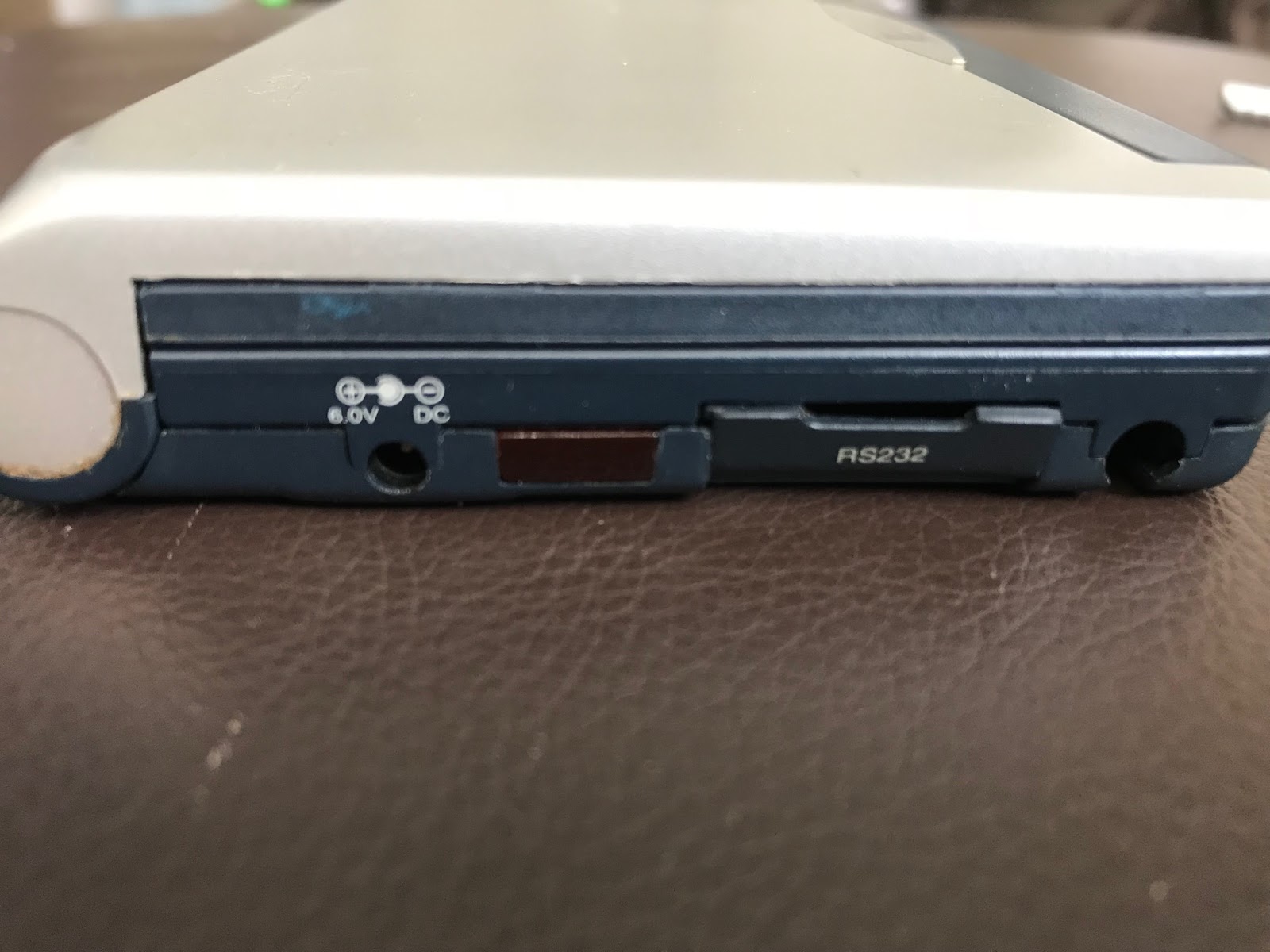 |
| Power, IR, RS-232 and slot for stylus |
 |
| CF slot cover |
Wednesday, 28 November 2018
Wargames Illustrated 374
The latest issue of Wargames Illustrated crossed my path this week and, having had a perusal, I thought it worthy of comment. You see, the December issue has a piece about Warlord Games latest cash grab, Cruel Seas and as I have more than a passing interest in naval warfare, the article piqued my curiosity.

So, Cruel Seas, a newboardgame wargame that centres on small scale naval actions in World War 2. The starter pack costs £50 and for that princely sum, you get 10 1:300th scale plastic vessels and all the gubbins including the rules to get you going. Think MTB's and E-Boats and there you have it. Needless to say, there are expansions planned but I'll get to those in a moment. As a gift, WI also includes either two MTB's or two E-Boats on sprues, worth about £6 if you go by the flotilla prices on the Warlord Games website. They're not bad, but my better half (who doesn't wargame at all) did comment that they looked like something out of a cereal packet - I can see her point.
So, onto the article and it sets the scene and describes a game played at Warlord HQ in some detail, reading like a very long infomercial, truth be told. Not that this is necessarily a bad thing as it means I have no interest in buying the game even though the period is of interest. Let me explain.
The play through guides us through the familiar Bolt Action dice system used by Cruel Seas, ship movement and weapons firing. The scenario they use is one of the simpler ones suggested by the rule set and it does seem to play quite quickly, though they don't half like their dice throwing. The torpedo attack described uses a total of 17(!) dice to ascertain one hit and its effect. True, one dice to determine whether the torpedo was a dud or not but 16 for effect. All I can ask is why? I know some rules use buckets of dice (Tactica being one that I have played but I can see why, one dice per figure, you have lots of figures, therefore lots of dice) but it seems to me that the "need" for 16 dice to determine the effect of one hit is plain overkill and extremely gamey. I don't think that you need that many dice and I don't wargame purely for the dice throwing. Never have and never will.
Another observation - the lack of realism, taking this another step away from an historical wargame and more towards a fancy boardgame. Despite being 1:300th scale and a skirmish game, weapons ranges are a lot shorter than reality and the range bands are suitably "unreal". Similarly, the "advanced" rule section contains aircraft that are one shot wonders that have no mechanism for loitering. How advanced to you need to be to understand loitering fighter/bomber cover?
If it feels like I am being too hard on Cruel Seas without even playing it then maybe I am. But there are plenty of other rule sets out there that cover the same type of naval action and to greater detail and historical accuracy. Ok, you don't get pretty models with them but there are plenty of suppliers who will sort out any requirements and scale you need.
That brings me to the add on packs. You can get additional flotilla's for £18 that contains 6 ships. There are also Fleet packs containing 6 to 10 ships (some metal) and one aircraft for £65 (numbers vary depending upon which country you select). Bear in mind that in the US Fleet pack, five of the ten ships supplied are landing craft, so in effect scenery. Finally, there are the Coastal Forces for £95 (discounted from £103). They have between 12 and 16 ships and comprise of a Fleet and Flotilla pack plus a rule set. That might seem a tad pricey but that is a discount instead of buying the separate national forces and the rule set, which alone costs £20 in softback. I do, however, think they are royally taking the piss with the limited edition hardback rule set for £75!!!
The cynical part of me thinks that Cruel Seas will be the Cinderella of the wargames scene for a couple of years before fading away. You can spend a ton of money with Warlord Games or you can do a bit of research and shopping around and get something that'll do the same job for less money. And be more historically accurate. Unless it's just about the game (innit!) in which case the nice packaged boardgame Cruel Seas will do you nicely.
As for the rest of the magazine, well, it was fairly crap, the most enlightening quote being in a profile piece on The Plastic Soldier Company: "... a rule set only exists to sell your miniatures." Whilst I know a few manufacturers who would disagree with that, certainly Warlord are on it like a bonnet!

So, Cruel Seas, a new
 |
| Coming to some cornflakes near you soon??? |
The play through guides us through the familiar Bolt Action dice system used by Cruel Seas, ship movement and weapons firing. The scenario they use is one of the simpler ones suggested by the rule set and it does seem to play quite quickly, though they don't half like their dice throwing. The torpedo attack described uses a total of 17(!) dice to ascertain one hit and its effect. True, one dice to determine whether the torpedo was a dud or not but 16 for effect. All I can ask is why? I know some rules use buckets of dice (Tactica being one that I have played but I can see why, one dice per figure, you have lots of figures, therefore lots of dice) but it seems to me that the "need" for 16 dice to determine the effect of one hit is plain overkill and extremely gamey. I don't think that you need that many dice and I don't wargame purely for the dice throwing. Never have and never will.
Another observation - the lack of realism, taking this another step away from an historical wargame and more towards a fancy boardgame. Despite being 1:300th scale and a skirmish game, weapons ranges are a lot shorter than reality and the range bands are suitably "unreal". Similarly, the "advanced" rule section contains aircraft that are one shot wonders that have no mechanism for loitering. How advanced to you need to be to understand loitering fighter/bomber cover?
If it feels like I am being too hard on Cruel Seas without even playing it then maybe I am. But there are plenty of other rule sets out there that cover the same type of naval action and to greater detail and historical accuracy. Ok, you don't get pretty models with them but there are plenty of suppliers who will sort out any requirements and scale you need.
That brings me to the add on packs. You can get additional flotilla's for £18 that contains 6 ships. There are also Fleet packs containing 6 to 10 ships (some metal) and one aircraft for £65 (numbers vary depending upon which country you select). Bear in mind that in the US Fleet pack, five of the ten ships supplied are landing craft, so in effect scenery. Finally, there are the Coastal Forces for £95 (discounted from £103). They have between 12 and 16 ships and comprise of a Fleet and Flotilla pack plus a rule set. That might seem a tad pricey but that is a discount instead of buying the separate national forces and the rule set, which alone costs £20 in softback. I do, however, think they are royally taking the piss with the limited edition hardback rule set for £75!!!
The cynical part of me thinks that Cruel Seas will be the Cinderella of the wargames scene for a couple of years before fading away. You can spend a ton of money with Warlord Games or you can do a bit of research and shopping around and get something that'll do the same job for less money. And be more historically accurate. Unless it's just about the game (innit!) in which case the nice packaged boardgame Cruel Seas will do you nicely.
As for the rest of the magazine, well, it was fairly crap, the most enlightening quote being in a profile piece on The Plastic Soldier Company: "... a rule set only exists to sell your miniatures." Whilst I know a few manufacturers who would disagree with that, certainly Warlord are on it like a bonnet!
Sunday, 4 November 2018
Interest or Hobby?
Part of the joys of work is that you interact with people of different ages and this can lead to some interesting conversations. I got talking to a gentleman who is a few years younger than myself who has an interest in videogames. Aha, I thought, this could be enlightening. It was, but not necessarily in a good way. You see, whilst he has fifteen years of console and PC gaming to his name, he has very little awareness of the history of his chosen hobby and, more importantly, no interest at all in expanding his knowledge. His is a transitory hobby, whatever new thing is in front of him is either great or shit. There are no levels in between these two extremes, just a binary yay or nay. So me being me, I raised this question: "Is this a hobby or an interest that you have?"
Now we each have our own approach to our hobbies. Indeed, how we approach a hobby defines that hobby's appeal to us (so the history and design of console hardware is of particular interest to me as an off-shoot to actually gaming itself). In the case of this younger gentleman, his was almost proud announcement that he knew nothing of gaming before he started playing back in the early 2000's and had no interest in what had happened before then, even to the point of not playing games that were released on his first console before he started gaming. I wasn't particularly surprised but it was quite saddening to hear.
The gentleman's first console was the Sony Playstation 2. A fine piece of hardware that hosted some of the best games of its generation, but my colleague expressed a narrow minded view that other console hardware released around that time (the sublime Sega Dreamcast, Nintendo's under-appreciated GameCube and the ground breaking original Microsoft X-Box) didn't matter because the PS2 won the sales war and as the other three lost, they didn't matter. As he wanted the best (in popularity at least), all other alternatives were discarded. Once the PS2 was replaced by the PS3, the older hardware was discarded and the games collection sold on. They were now old and of no further use. The latest was now, in his mind, the greatest.
Horses for courses I suppose, but then I have always been a collector (or hoarder as my better half would have it). Since the last house move, I have sold on most of my collection due to space issues but I did keep a few titles that have never been replicated since their original release. For example, Sky Odyssey for the PS2. The aim of the game is to pilot your aircraft successfully from A to B, encountering various obstacles and challenges along the way. There is no shooting, no whizz bang explosions, just pure flying. This title was in some way a slightly more realistic spiritual successor to the "Pilotwings" series that had releases on the Nintendo SNES (1990), the Nintendo 64 (1996) consoles. That such titles are few and far between demonstrates their sheer niche appeal and since then, only the lightweight Pilotwings Resort, released for the Nintendo 3DS (2011) has offered anything similar in the flying genre. I know Pilotwings Resort is lightweight by the fact that I have played both of its predecessors. Sky Odyssey, by the way, is still a great experience today and well worth a try if you can pick up a copy and have the hardware to play it on.
But what really made me think was how shallow my young colleagues approach to his hobby was. I struggled to bring together the two ideas of loving a hobby but having no knowledge or interest in anything outside of your own sphere of experience. In fact, he wouldn't countenance any move to expand that knowledge - it's old and therefore it's shit. That attitude, it must be said, is not just limited to videogames. Wargaming also has a similar issue.
Now, to be fair, I am not going to be tarring everybody with this brush, but lack of knowledge seems to be a badge of pride, and not just for the younger generation. Without a depth of knowledge in your hobby, how do you put what is current market offering into perspective? How can you judge any perceived improvements when you have no background on the subject you are purported to enjoy? That was evident when, at a show a couple of years back, one guy wanted fighting camels for his forces. When told they weren't used for that during the period he was fighting, he replied "It doesn't matter, you can still put them on the table." Historical wargaming indeed!
Back to my colleague. As gaming to him doesn't exist prior to 2002, he has never, and proudly claims will never, play classics like Command and Conquer, any LucasArts point and click adventure, Super Mario 64, Goldeneye, Resident Evil, Half Life and countless other titles because they don't matter. Yet without those titles, we wouldn't have the games we have today. True, time has not been kind to most of these, but some have aged well and to miss out on those today, if you are a gamer, is a crying shame.
From a wargaming perspective, I'll use Team Yankee. I like them for what they are (and the chance to tinker with them at will adds some of the depth that a hobby needs), but subjectively, how different is the core mechanism from Operation Warboard? Or Featherstone's rules? Not much, but because TY has shiny hard-backed rule sets with lots of pictures, they are perceived by quite a few gamers as better - and that is a conversation I had at the Durham show this year where I ran a demo game. It also revealed that most of the people who asked questions about my amendments (which were based on my reading of texts both modern and contemporaneous) had taken what was offered in the rule sets as sufficient knowledge of the period - further reading was something that seemed like an anathema to them. Woe betide anyone (i.e. me) to use actual knowledge to dis-abuse them of their ignorance. Hey ho.
Personally, I don't follow the "newer is better" mindset - after all, I am typing this on an 18-year old Alphasmart 3000. Yes, there are new niche text entry products (looking at you, Astrohaus) but I'm not willing to spend a few hundred quid on something when a more convenient (and cheaper) option exists. The same can be said for wargames rules - our recent attempts at playing Charge (I picked up a re-print at Salute this year for my own perusal after the first kicking I received) and other older rule sets have been interesting. They don't have lots of pictures or specialised kit, but they do the job and (this is important) they follow the historical period they model. Certainly compared to some more modern rules (Black Powder, Pikeman's Lament and others), the older set's adherence to history is refreshing, possibly demonstrating how far the modern wargaming market has lost its way from historical knowledge and focuses on rolling lots and lots of dice.
It does make me wonder if we are moving to a point where the history and context of any particular hobby no longer matters to the individuals partaking in that hobby. Whilst people may demonstrate a breadth of knowledge, there is so little depth that the individual misses out on the richness that makes a hobby enjoyable. Without that depth, could the hobby be classed as such at all? Is it not just then a passing interest? Also, without context, how do you judge whether the latest rule set/game/whatever is an improvement on what came before or just a money making enterprise by the creator and will it enrich your enjoyment of your hobby? As far as hobbies go, surely this is a bad thing?
Now we each have our own approach to our hobbies. Indeed, how we approach a hobby defines that hobby's appeal to us (so the history and design of console hardware is of particular interest to me as an off-shoot to actually gaming itself). In the case of this younger gentleman, his was almost proud announcement that he knew nothing of gaming before he started playing back in the early 2000's and had no interest in what had happened before then, even to the point of not playing games that were released on his first console before he started gaming. I wasn't particularly surprised but it was quite saddening to hear.
The gentleman's first console was the Sony Playstation 2. A fine piece of hardware that hosted some of the best games of its generation, but my colleague expressed a narrow minded view that other console hardware released around that time (the sublime Sega Dreamcast, Nintendo's under-appreciated GameCube and the ground breaking original Microsoft X-Box) didn't matter because the PS2 won the sales war and as the other three lost, they didn't matter. As he wanted the best (in popularity at least), all other alternatives were discarded. Once the PS2 was replaced by the PS3, the older hardware was discarded and the games collection sold on. They were now old and of no further use. The latest was now, in his mind, the greatest.
 |
| A classic of its time. |
Horses for courses I suppose, but then I have always been a collector (or hoarder as my better half would have it). Since the last house move, I have sold on most of my collection due to space issues but I did keep a few titles that have never been replicated since their original release. For example, Sky Odyssey for the PS2. The aim of the game is to pilot your aircraft successfully from A to B, encountering various obstacles and challenges along the way. There is no shooting, no whizz bang explosions, just pure flying. This title was in some way a slightly more realistic spiritual successor to the "Pilotwings" series that had releases on the Nintendo SNES (1990), the Nintendo 64 (1996) consoles. That such titles are few and far between demonstrates their sheer niche appeal and since then, only the lightweight Pilotwings Resort, released for the Nintendo 3DS (2011) has offered anything similar in the flying genre. I know Pilotwings Resort is lightweight by the fact that I have played both of its predecessors. Sky Odyssey, by the way, is still a great experience today and well worth a try if you can pick up a copy and have the hardware to play it on.
But what really made me think was how shallow my young colleagues approach to his hobby was. I struggled to bring together the two ideas of loving a hobby but having no knowledge or interest in anything outside of your own sphere of experience. In fact, he wouldn't countenance any move to expand that knowledge - it's old and therefore it's shit. That attitude, it must be said, is not just limited to videogames. Wargaming also has a similar issue.
Now, to be fair, I am not going to be tarring everybody with this brush, but lack of knowledge seems to be a badge of pride, and not just for the younger generation. Without a depth of knowledge in your hobby, how do you put what is current market offering into perspective? How can you judge any perceived improvements when you have no background on the subject you are purported to enjoy? That was evident when, at a show a couple of years back, one guy wanted fighting camels for his forces. When told they weren't used for that during the period he was fighting, he replied "It doesn't matter, you can still put them on the table." Historical wargaming indeed!
Back to my colleague. As gaming to him doesn't exist prior to 2002, he has never, and proudly claims will never, play classics like Command and Conquer, any LucasArts point and click adventure, Super Mario 64, Goldeneye, Resident Evil, Half Life and countless other titles because they don't matter. Yet without those titles, we wouldn't have the games we have today. True, time has not been kind to most of these, but some have aged well and to miss out on those today, if you are a gamer, is a crying shame.
From a wargaming perspective, I'll use Team Yankee. I like them for what they are (and the chance to tinker with them at will adds some of the depth that a hobby needs), but subjectively, how different is the core mechanism from Operation Warboard? Or Featherstone's rules? Not much, but because TY has shiny hard-backed rule sets with lots of pictures, they are perceived by quite a few gamers as better - and that is a conversation I had at the Durham show this year where I ran a demo game. It also revealed that most of the people who asked questions about my amendments (which were based on my reading of texts both modern and contemporaneous) had taken what was offered in the rule sets as sufficient knowledge of the period - further reading was something that seemed like an anathema to them. Woe betide anyone (i.e. me) to use actual knowledge to dis-abuse them of their ignorance. Hey ho.
 |
| Take your pick... |
It does make me wonder if we are moving to a point where the history and context of any particular hobby no longer matters to the individuals partaking in that hobby. Whilst people may demonstrate a breadth of knowledge, there is so little depth that the individual misses out on the richness that makes a hobby enjoyable. Without that depth, could the hobby be classed as such at all? Is it not just then a passing interest? Also, without context, how do you judge whether the latest rule set/game/whatever is an improvement on what came before or just a money making enterprise by the creator and will it enrich your enjoyment of your hobby? As far as hobbies go, surely this is a bad thing?
Monday, 15 October 2018
Amstrad GX4000 - Swansong for the 8-bit console era
 |
| The box in all of its glory |
The Amstrad GX4000
was, for me, and only for a short time, the dream machine. Launched
in the autumn of 1990, Amstrad hoped to prolong the life of their CPC
home computers by bringing in an updated range of CPC+ machines and
an associated 8-bit games console, the GX4000. It turned out these
were the last throw of the dice for 8-bit machines in the UK. Indeed,
it was probably not the greatest business decision by Amstrad to
launch an 8-bit console as the era of the 16-bit Sega Megadrive and
Nintendo SNES was beginning but by this time, Amstrad were turning
away from home computing and focusing on the expanding PC market,
leaving their older machines to die off slowly.
 |
| Still in decent nick |
What did the +plus
machines bring to the market? Well, some fancier graphics modes
(compared to the older models), a SCART socket and a cartridge slot
that permitted software to access the new graphics modes. And that
was part of the problem, the requirement to use the cartridge slot to
benefit from the new capabilities. The plan was that the new fancy
games on cartridge benefited both the home computers and the console
and Amstrad made more money from the use of cartridges. Bear in mind
that this was also the period of breakout sales for the Commodore
Amiga and Atari ST, computers that hovered around the £300 to £400
mark that Amstrad had also priced the +plus range at. Ok, you got a
dedicated monitor with the Amstrads' but portable TV’s were also
decreasing in price and in most cases, people already had a portable
TV before buying a computer so didn’t really need another display
on their desk.
 |
| Ports at the back - 2 x power (mains and monitor), RBG, SCART and RF. |
 |
| Ports at the front - headphone, 2 x 9 pin controller, 1 x 15 pin analogue and RJ11 for light guns. |
Still, they released
the new range, with an unlikely competitor from Commodore with their
C64GS which was basically a Commodore C64 computer without the
keyboard. With nothing new to add to that platform, the C64GS
disappeared with barely a whimper. Amstrad did gain the support of
quite a few European software houses, with the likes of Ocean, Titus
and US Gold promising new titles. What consumers ended up getting,
however, were conversions of CPC titles that cost £24.99 to £29.99
due to their cartridge format. Most of these looked no better than
their cassette brothers retailing for under a tenner. Lazy
conversions and pricing aside, the GX4000 carts also suffered when
compared to similarly priced 16-bit software, which looked better,
had a higher resolutions and offered better sound quality. Yet, for
all of that, early reactions were positive and at £99, the GX4000
compared favourably to the existing 8-bit Sega Master System and
Nintendo NES machines, especially when programmers took advantage of
the extra graphics modes the cartridge access allowed. One final +plus
(see what I did there) was that the machine had a distinctive look,
similar to a Cylon fighter from the original Battlestar Galactica TV
show. It certainly looked different to the usual black or grey box
under the TV.
 |
| Evil, just evil. |
The one other
downside that needs to be mentioned is the controller. Yes, you got
two of them in the box, but they were and are horrible. They’re
tiny, cause hand cramp within 10 minutes of use and the response from
both the d-pad and buttons is mushy and lifeless. The plastic also
creaks alarmingly.
I suppose I liked
the GX4000 so much at the time because of its heritage. Having owned
a CPC464 since 1987, and only just about to make the jump to the
Amiga 500. The CPC464 was my formative home computer and I will never
forget the fun playing games, programming and just plain messing
about on it that took up many a weekend. Times, they were a changing
though, and as far as Amstrad was concerned, they simply couldn’t
compete with the likes of Sega and Nintendo who had the software
pedigree and sheer volume of titles to bury the little British
upstart. It didn’t help that the software support pledged was
dependent upon the machine selling well. But as the machine sold
poorly, partially due to lack of software, few games were released.
A total of 27 titles
were released for the GX4000, most of which were straight conversions
of existing CPC games. Looking at contemporaneous reviews, few of
them reviewed well, with only the likes of "Burning Rubber", "Robocop
2" and "Pang" getting anywhere near above average scores. One thing
of note is the cartridge packaging which, although outlandish
compared to the boring DVD-style case mundanity we have now, brought a
certain sense of style to any shelf and are more robust that the
cardboard or plastic jewel cases used by other consoles in the ‘90’s.
 |
| 90's game packaging - rather unique. |
 |
| And also bigger than strictly necessary. |
That the GX4000 is
comparatively rare is underlined by the quite high prices they go for
on E-Bay, around £50 for the console itself and more than a few
sellers asking for £80+ for individual titles. The machine I have was
about that price but comes in the original packaging with inserts.
The plastic hasn’t dis-coloured too much and the condition overall
is very good. I think this is the start of a collection for me and
I’ll be keeping an eye out for games on E-Bay, retro games shows
and online dealers, all the while avoiding the scalping that the
rarity (and lack of popularity) of the machine seems to bring. I
think getting hold of every game will be a challenge but a worthwhile
one and like I said before, the cases do look good on the shelf (ok,
one case, but it’s a start).
Lacking the exotic
appeal of the NEC PC-Engine (which never received an official
European release) or the extreme expense of the 16-bit SNK Neo Geo
AES, the GX4000 is little known outside Western Europe and even then,
you have to be of a certain age or a console history buff to know of
it. The GX4000 represented the end of the European manufacturers in
the home videogame market and, shortly afterwards, the home computer
market too. The more advanced 16-bit generation was the dawn of the
US and Japanese companies which had a whole different scale of
operation that the likes of Amstrad couldn’t match. Nonetheless,
that Amstrad tried shouldn’t be criticised. It was a worthy effort,
with decent specs even for the time and as such, deserves to be
remembered for that, if nothing else.
Monday, 24 September 2018
Jack Ryan - Amazon TV Show
One of them most anticipated television shows of the year and one that Amazon were so confident about that they commissioned a second season prior to the first being aired, Jack Ryan arrived with a fair amount of hype and it was something I was looking forward to. Is it worthy of the hype? Well...
I have been a Tom Clancy fan since the late 1980's, first reading a paperback copy of The Hunt for Red October at the tender age of 11 and enjoying each of the subsequent Jack Ryan-verse novels, pretty much up to The Bear and The Dragon which, although not bad, wasn't up to the author's usual standards and felt like it was ghost written.
The cinema adaptations of Clancy's books were mostly entertaining, starting off with the Alec Baldwin-leading The Hunt for Red October. This was slickly made and aimed to be an intelligent Cold War thriller. It certainly had the requisite tension and technological accuracy (mostly), but the character of Ryan took a back seat to the more seasoned and recognisable Captain Marko Ramius, played by Sean Connery. Still, it's my favourite Clancy film and works well even today. The Harrison Ford follow ups (Patriot Games and Clear and Present Danger) each had their strong points and portrayed a more mature and scholarly Ryan. That style made me want them to make more of the Ford-starring films but that was not to be. What we ended up with was the Ben Affleck led The Sum of All Fears, again well made but that suffered a change of villains (to neo-Nazi's of all people) and a quite bland Ryan. The most recent film, Jack Ryan: Shadow Recruit, was a play for a new franchise starring Chris Pine but this didn't find the success it needed and to be honest, Pine didn't fit the Ryan character as envisaged by Clancy. This brings me to the Amazon financed TV show with John Krasinski, better known for starring the the US version of The Office, as Ryan. We're once again at the beginning of his CIA career so we're getting another origin story too.
Surprisingly for a modern limited run TV show, Jack Ryan runs for a mere eight episodes which, when you consider the likes of Netflix's bloated Marvel TV shows, is a blessing. Episode length varies from around 44 minutes to an hour and each feels about right in length, never dragging but also never feeling overly stuffed. Nope, they got this just about right. Having the Middle East as a focus, there is a great deal of location filming and, in general, the production values are high. A bit of a side trip to Paris (Montreal in reality) and you have a show that portrays a global reach very well, something that older shows (with greater episode counts per season) such as The Unit, Scorpion and NCIS often failed at as they were reduced to backlot filming and the same Californian orchards time and time again. Kudos must also be given for having non-English characters speak in their native language with added subtitles. It does get more than a little wearing that all foreigners speak with "British" accented English (as Americans would put it. As a native of the UK, I have never heard what a "British" accent sounds like).
The casting is excellent too. Krasinski is a rather good fit as Ryan, playing a former US Marine recovering from a traumatic incident and trying to settle into an office job at the CIA. He gives off the sense of being slightly out of his depth rather well but is also capable when forced to wing it as the situation demands. If there is a downside then it comes from the shows inability to completely convince about how clever Ryan is. That and the "by accident" meeting with Cathy Mueller, a contagious disease expert that fits in too neatly into the over-arching plot. Quite what they can do with Abbey Cornish's character is season two remains to be seen because there is the risk that a handy plot device in season one will just lead to a one-dimensional background character in season two and that would be a great injustice to all concerned.
Wendell Pierce plays James Greer, recently dumped in to Ryan's department to lead it after a fall from grace. Some reviewers have been a bit unkind to the actor for his bulk but that fits in with the desk-based role the character has and it works for me. However, the character's religion, Islam, feels like another easy plot device and again, I can't see what relevancy it will have an the next season. He does, however, work well with Ryan and the sarcastic banter between the two is a highlight of the show.
Ali Suliman as Mousa Bin Suleiman gives a cracking performance as the villain of the piece, as does Dina Shihabi as his wife who is put through the wringer by his actions and her conscience. Both emerge as well rounded and sympathetic characters, even though Suleiman is callous beyond redemption. Indeed, character building is a strong point through episodes one to six and it is only in the final two that this, as well as the pacing, falters and the show degenerates into the standard "catch the bad guy tale". It also demonstrates that the show is not as intelligent as it wants you to think it is. There is still enough drama, both with the primary storyline and the different secondary strands to keep you hooked and those strands are tied up reasonably neatly by the closing credits of the final episode.
Jack Ryan is not without its faults, as noted above, but it does enough to not only establish the main characters but also the TV-universe that those characters inhabit. Certainly, it succeeds in bringing to life the titular character and hopefully the second season can build in the foundations of the first and improve on its weaknesses. If you have access to Amazon Prime, I highly recommend Jack Ryan and await with anticipation the follow up season in 2019.
I have been a Tom Clancy fan since the late 1980's, first reading a paperback copy of The Hunt for Red October at the tender age of 11 and enjoying each of the subsequent Jack Ryan-verse novels, pretty much up to The Bear and The Dragon which, although not bad, wasn't up to the author's usual standards and felt like it was ghost written.
The cinema adaptations of Clancy's books were mostly entertaining, starting off with the Alec Baldwin-leading The Hunt for Red October. This was slickly made and aimed to be an intelligent Cold War thriller. It certainly had the requisite tension and technological accuracy (mostly), but the character of Ryan took a back seat to the more seasoned and recognisable Captain Marko Ramius, played by Sean Connery. Still, it's my favourite Clancy film and works well even today. The Harrison Ford follow ups (Patriot Games and Clear and Present Danger) each had their strong points and portrayed a more mature and scholarly Ryan. That style made me want them to make more of the Ford-starring films but that was not to be. What we ended up with was the Ben Affleck led The Sum of All Fears, again well made but that suffered a change of villains (to neo-Nazi's of all people) and a quite bland Ryan. The most recent film, Jack Ryan: Shadow Recruit, was a play for a new franchise starring Chris Pine but this didn't find the success it needed and to be honest, Pine didn't fit the Ryan character as envisaged by Clancy. This brings me to the Amazon financed TV show with John Krasinski, better known for starring the the US version of The Office, as Ryan. We're once again at the beginning of his CIA career so we're getting another origin story too.
Surprisingly for a modern limited run TV show, Jack Ryan runs for a mere eight episodes which, when you consider the likes of Netflix's bloated Marvel TV shows, is a blessing. Episode length varies from around 44 minutes to an hour and each feels about right in length, never dragging but also never feeling overly stuffed. Nope, they got this just about right. Having the Middle East as a focus, there is a great deal of location filming and, in general, the production values are high. A bit of a side trip to Paris (Montreal in reality) and you have a show that portrays a global reach very well, something that older shows (with greater episode counts per season) such as The Unit, Scorpion and NCIS often failed at as they were reduced to backlot filming and the same Californian orchards time and time again. Kudos must also be given for having non-English characters speak in their native language with added subtitles. It does get more than a little wearing that all foreigners speak with "British" accented English (as Americans would put it. As a native of the UK, I have never heard what a "British" accent sounds like).
The casting is excellent too. Krasinski is a rather good fit as Ryan, playing a former US Marine recovering from a traumatic incident and trying to settle into an office job at the CIA. He gives off the sense of being slightly out of his depth rather well but is also capable when forced to wing it as the situation demands. If there is a downside then it comes from the shows inability to completely convince about how clever Ryan is. That and the "by accident" meeting with Cathy Mueller, a contagious disease expert that fits in too neatly into the over-arching plot. Quite what they can do with Abbey Cornish's character is season two remains to be seen because there is the risk that a handy plot device in season one will just lead to a one-dimensional background character in season two and that would be a great injustice to all concerned.
Wendell Pierce plays James Greer, recently dumped in to Ryan's department to lead it after a fall from grace. Some reviewers have been a bit unkind to the actor for his bulk but that fits in with the desk-based role the character has and it works for me. However, the character's religion, Islam, feels like another easy plot device and again, I can't see what relevancy it will have an the next season. He does, however, work well with Ryan and the sarcastic banter between the two is a highlight of the show.
Ali Suliman as Mousa Bin Suleiman gives a cracking performance as the villain of the piece, as does Dina Shihabi as his wife who is put through the wringer by his actions and her conscience. Both emerge as well rounded and sympathetic characters, even though Suleiman is callous beyond redemption. Indeed, character building is a strong point through episodes one to six and it is only in the final two that this, as well as the pacing, falters and the show degenerates into the standard "catch the bad guy tale". It also demonstrates that the show is not as intelligent as it wants you to think it is. There is still enough drama, both with the primary storyline and the different secondary strands to keep you hooked and those strands are tied up reasonably neatly by the closing credits of the final episode.
Jack Ryan is not without its faults, as noted above, but it does enough to not only establish the main characters but also the TV-universe that those characters inhabit. Certainly, it succeeds in bringing to life the titular character and hopefully the second season can build in the foundations of the first and improve on its weaknesses. If you have access to Amazon Prime, I highly recommend Jack Ryan and await with anticipation the follow up season in 2019.
Subscribe to:
Posts (Atom)