Wednesday, 16 June 2021

From Gamers Magazine - Review

Regular readers will know that I am a sucker for a physically printed publication. As various mainstream magazines have declined and shut down over the last few years, there has been a rise in the popularity of bespoke publications. Be it long term niche periodicals like Archive Magazine, Amiga Future and SAM Revival or newcomers like Amiga Addict and E1M1, there remains a demand for magazines that you can hold in your hand. This continues with the latest entry to the video games market: From Gamers Magazine.

Now that is n eye-catching cover!

Funded by a Kickstarter that raised $6,000 from a $5,000 goal in April this year, From Gamers aimed to produce two issues with that initial round of fund raising. The first issue was released into the wild a couple of weeks ago when backers were given a download link and, at the same time, they started posting out the physical copies. Given it was coming from the US, receiving my copy a couple of days ago didn't feel like too much of a wait and it was with some anticipation that I opened the well padded envelope to see what my pledge had paid for. 

First impressions and the cover is really nice. Heavy duty, you can feel the quality, and there is no skimping here. Same with the binding, which feels solid and there is little fear of pages falling out. There is definitely a professional feel to the mag. The pages themselves, 52 in all, are full colour on high quality stock. Each page is well laid out and there isn't a propensity for "white" space, something that is definitely becoming a thing, especially in UK published mainstream magazines. Included in the magazine were a pair or cover art post cards, a note about promoting the magazine on Twitter to enter a competition to win a $10 Amazon voucher, and a lovely (and totally unexpected) handwritten note. It's the little things in life, it really is, but that was a nice touch.

Content wise and we have a full page dedicated to the staff behind the magazine (there are quite a few contributors), as well as a list of the Kickstarter Team (yours truly is on that). A nice editorial and a well designed contents page come next, followed by a cracking opinion piece on the rise of cinematic gaming, using Miles Morales on the PlayStation 5 as the crux of its argument. I have to admit, I am with the author on this one.

There is some cool art work inside the magazine as well as on the cover.

A piece on franchises that should return comes next and, again, I agree with the selection of titles included, especially Alpha Protocol. The rest are worthy but it's that under-appreciated RPG that really needs a continuation. A focus on three concept artists who worked on The Last of Us II is a wonderful look at how concept art is used to define a world prior to actual game creation and just how close the initial artwork can be to the final product. 

Two developer interviews follow. Jorge Garcia, co-director and producer of Tunche, a 2D beat 'em up and Andrew Willans, Game Director at Sumo Digital's Newcastle team. Both good reads and nice to see an interview with a local developer (Newcastle is ten miles from home as the crow flies). Deathloop gets a great introduction and how developer Arkane's past has defined its latest title, whilst Halo warrants three pages on how the series could return to its glory days. The Far Cry franchise gets a four page history guide and a look at what is coming next, and Far Cry 6 is also covered in the Previews section, alongside Little Devil Inside, Back 4 Blood, and the latest Ratchet and Clank release, Rift Apart. A nice touch for each of these is the inclusion of a printed QR code to view the latest trailer.

Five games are reviewed, as well as a book. Persona 5 Strikers, Bravely Default II, It Takes Two, Monster Hunter Rise and Outriders are the games covered, each getting two pages. There are plenty of screenshots and they provide an "out of ten" scoring system. The book review is of journalist Jason Schreier's latest tome, Press Reset, which details the physical and mental cost of working in the games industry. I enjoyed the review and the book was already on my Wishlist so I'll be buying it on it's UK release date tomorrow.


There are just a few ads in the magazine, but not so many as to take away from the content and it was also nice to see a list of Kickstarter supporters included as well (and yes, I'm on that too).

From Gamers Magazine, then, has had a fantastic first issue. The quality of the writing is high, topics are varied and it's a great start. The second issue is due out around September and they are asking for pitches from would-be contributors up until the end of June. You can find out more here, as well as buy the first issue and pre-order the second here. I know I'm looking forward to the second issue and, seeing where they go from here, supporting future issues as well, be it from a subscriber drive or another Kickstarter. Well done to all concerned.

Friday, 11 June 2021

Was That Film Really That Bad??? DOA: Dead or Alive (2006)

It's the early noughties and a good ten years since videogames movies started hitting the multiplexes. You're a producer looking for a new hit movie to appeal to the increasingly large videogame fan market and you want a reasonable chance of a financial return. Mario flopped in the early 90's, the two Angelina Jolie-starring Tomb Raiders did OK but signs were not promising for any future follow ups and Resident Evil managed to be quite the success despite not really appealing to fans of the actual games. What do you do? Well, you look at what made Resi work and you look at the genre of videogame film adaptations that seemed to have the most success and you combine the two together. This mash up of Paul W.S. Anderson (Wor Paul) and Streetfighter/Mortal Kombat delivers DOA: Dead or Alive.


Budgeted at a modest $30m and made in China, you'd have thought hopes were high that a martial arts style movie based on the popular beat-em up series (and very popular volleyball spin offs with realistic "breast physics"(!)) would coin it in at the box office. $7.7m proved otherwise. Indeed, the film was delayed in the US because of the tepid international release and was eventually pulled out of the US market after just 21 days. But was that film really that bad???

Hey, it's one way to win the next Eurovision...

Plot first, and we have a large corporation inviting the best fighters in the world to a competition where they can win $10m. The film focuses on three of these competitors who each bring a sub-story with them and, this being a videogames movie, there is a fifth plot line just to tie things kind of together. There's also nano-bots cos, hey, videogames.

Devon Aoki plays Kasumi, a Shinobi ninja princess (that LinkedIn profile must be a hoot) looking for her brother (Hayate, played by Collin Chou) who disappeared during a previous DOA contest (and because she is now on the run from her family, is being chased by Ayane (Natassia Malthe), an assassin and Hayabusa (Kane Kosugi), a friend of her missing brother. Whilst she kicks this story off and has a connection to that fifth plot line, Aoki only gets fifth billing which seems more than a little unfair. Top billing goes to Jamie Pressly, playing superstar wrestler Tina Armstrong who wants to prove herself as more than just a superstar wrestler but also has to contend with her father (real life wrestler Kevin Nash playing Bass Armstrong) being in the same DOA competition. Rounding out the trio is Neighbours alumni Holly Valance, playing Christie, a master thief and assassin who is followed by her slightly dodgy companion Max (a youthful looking Matthew Marsden who had previously had stints in Emmerdale, Coronation Street and would later make the move the US).

Oh dear...

The rest of the cast are a mixed bag and whilst they do what they need to, three other cast members deserve comment. Sarah Carter plays Helena Douglas, daughter of the competition's late founder. By rights, as she finds out what nefarious scheme is being played out behind the scenes, she should be the dramatic foil to that plot, yet the actress doesn't achieve that. I think this is a script and directorial choice rather than the actress as she has done a lot better in other roles, but here falls flat. Steve Howey is stereotypical computer nerd Weatherby (the running gag about people not getting his name right is pointless and unfunny), and whilst there is a character arc for him, I think the term "voyeuristic pervert" sums up the starting point quite well. Ok, there is redemption for him but still, his introduction is not a good one. Last, but not least, is Eric Roberts. Yes, Julia's brother, this time with long hair and more than the look of a gentleman who shouldn't be hanging round dressing rooms... Now hold on, I know what you're thinking. Yes, he had a good start in acting, with an Oscar nod in 1985 to boot, but given that he very much became an actor for hire with over 600 credits to date, you can't help but notice the tendrils of concern reaching into your brain as you realise that if it stars Eric Roberts, you may not be watching the best quality movie or TV show. He plays Dr Victor Donovan, the guy running the competition and also behind the reason the competitors are injected with nano-sensors - he wants to use their fighting skills in a pair of augmented reality glasses to make the wearer the best fighter in the world. Obviously, he wants to sell this tech on and become stupidly rich. Ok, not a bad back-of a-napkin plot but neatly forgets that whilst you might be the best hand-to-hand fighter in the world, if your opponent has a gun, you're buggered. Still, videogames, nano-sensors and another plot line to pad out the slim 83 minute run time. 

One man and his multi-coloured porn collection...

DOA follows the videogame movie template set up by Wor Paul with Resident Evil (and he produced this film too so no surprise there), with its explanatory computer screen graphics (this time showing who is fighting in each round and the winners moving forward) and it keeps the same focus on a specific marketing demographic - the horny teenage boy. After all, it's a movie based on watching slim, attractive, partially dressed women fight in various arenas, including a rain soaked beach. High brow, this is not, though there is a bit of a nod to the silliness: as the trio of ladies discover that their every move has been recorded during the competition, one comments that the people who set this up were a bunch of pervs - is it wise to comment on the majority of your audience like that or would you expect them not to notice? That pandering covers the plots as well, as we see Kasumi eventually find her brother (Donovan was keeping him for the nano project), Tina prove she is a better fighter than her dad and Christie, whilst not getting the money, hooking up with Max instead. Weatherby gets hooked up with Helena and Donovan gets his comeuppance. To call this simplistic would be an injustice to simple things. 

As a fight-based movie then, you'd expect some decent fight scenes and you do, kinda, get them. Director Corey Yuen is not someone unfamiliar with action scenes (he directed The Transporter and his body of work has some notable titles in it) and at times, there are some decent sequences (keeping within the 15 rating). However, some of the wire work is slow and unbelievable, and that scaffolding climb at the start of the competition is laughable, though so is the CGI showing it blowing up at the film's finale. When scenes should be fast and kinetic, they drag and look like it was a fan creation at a cosplay event. The use of crap CGI is also noticeable at the very beginning where the zoom shot appears to have untextured doors on the virtual recreation of Kasmui's palace. It doesn't help that they used the real location a few seconds later and also further into the film (when dressed up) in a fight scene where it's supposed to be a completely different location. This gives more than a little of the air of a cheap BBC sci-fi drama (yes, looking at you again, BUGS), and that had little to no CGI at all. Still, we get the fight scenes, but it has to be said that the final scrap between Donovan and the ladies cannot get away from the fact that Eric Roberts is not a fighter. Once or twice, I did think they'd told him to get long hair so that, with those AR glasses on, you can't see whether it's him or his stunt double. 

Nope, no idea either...

Typical of videogames movies of the time, the music is all loud, guitar heavy punching beats that are supposed to make you think that what you are watching is exciting but can just be headache inducing. The same can be said if you start thinking of the events that drive the plot. For example, at the beginning where Kasumi wants to escape the compound she is being held in, there is a fight, she dives off a cliff, reveals she has a glider in her backpack (I'm not kidding!) and then, and only then, a flying shuriken comes out of nowhere to inform her she has been invited to the DOA competition. With Tina, it's after four "comedy" pirates are defeated trying to capture the boat she is on, a similar shuriken comes out of the sea. And with Christie, it's when she's on a motorbike after escaping the law from a hotel bust... whilst said bike is motoring down a busy city street. Once again, we're in the "it looks cool but it's complete bollocks" school of film making. Let's also not forget the fight where a guy sets his shoulders and they've added the sound effect of a gun being cocked over it. Yeah...

Characterisation is also weak - the motivations of each character are plain to see and to be fair to each of the cast, they are not exactly burdened with carrying the plot forward much. The quality of the acting isn't that great either, but as noted above, each has done better work elsewhere so it's the script and direction that get the blame here. 

DOA: Dead or Alive is a crap film, and yes, it really is that bad. However, get past the wonky acting, terrible and over-packed story, dubious wire work and fight scenes, cardboard characters and the every so slightly uncomfortable feeling that you really shouldn't be watching this (so only a few things to get over) and what you do have is the perfect Friday night film. I would recommend at least three or four strong beers to begin with, just to stop the higher brain functions trying to make sense of what your eyes are seeing, but at less than an hour and a half, DOA does not outstay its welcome. I expected much worse from what Laila had told me about this film but since it was only £1 at CEX, it wasn't a total waste of money. DOA, then,  is a testament to the braindead and simplistic way videogame adaptations keep being handled by filmmakers. What I can say is that at least it was not an Uwe Boll film...

Many thanks to Laila for suggesting this one. If there is a movie that you think fits into this type of post, you can comment below or contact me on Twitter here

Saturday, 29 May 2021

The NES and SNES Encyclopedia - Two Book Review

What do you get when you cross a Scottish Videogame journalist, a love Nintendo home consoles and a penchant for really bad jokes? The answer, gentle reader, are these two volumes: The NES Encyclopedia and The SNES Encyclopedia.

A fine looking pair as ever I saw...

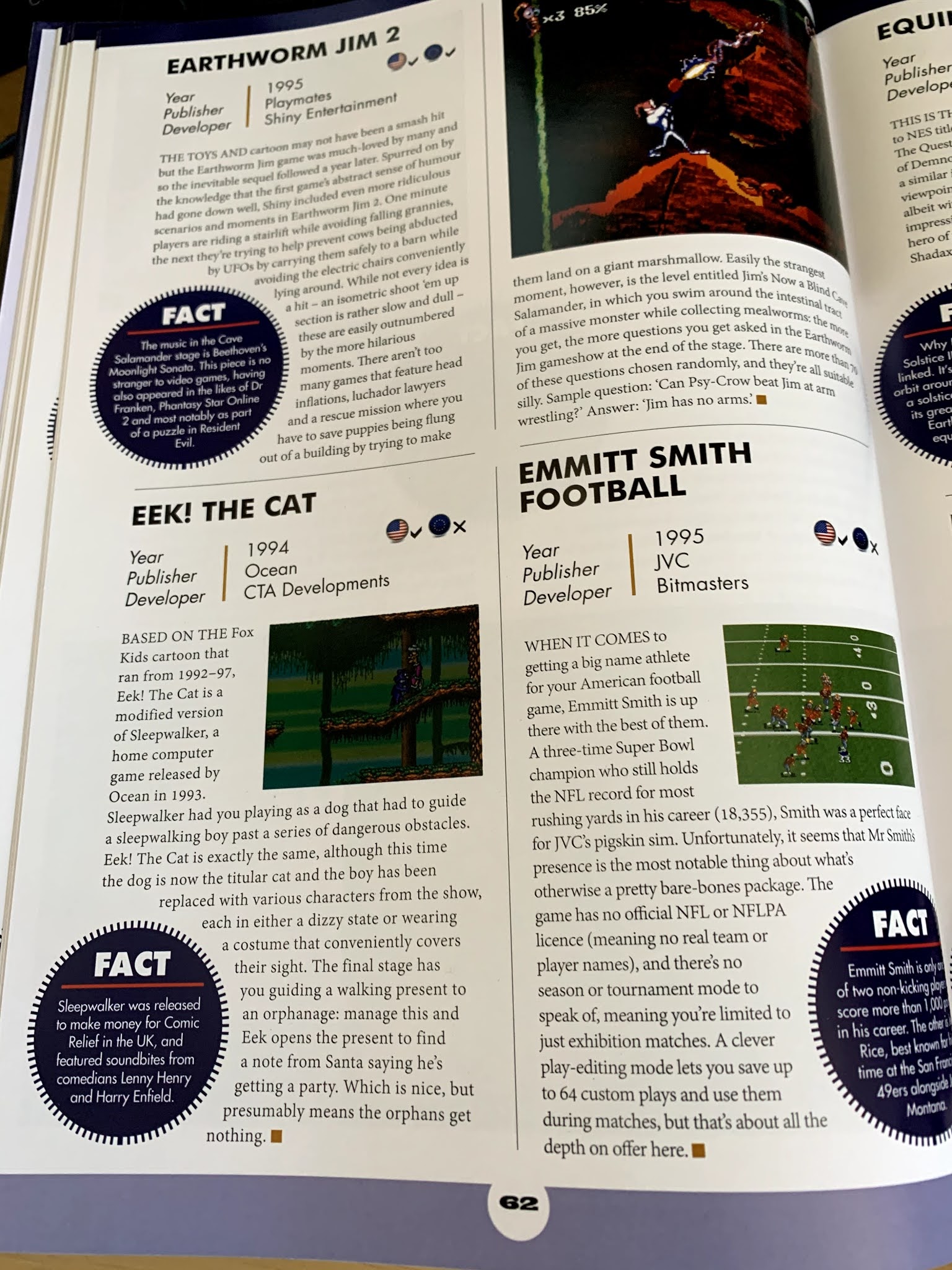
The NES volume was first to be published way back(!) in 2018 - look, it's been a long 2020/21 so far. Three years ago seems like ancient history! The paperback copy runs to just over 270 pages and covers every game released for the Nintendo Entertainment System (so US and PAL regions). That's over 850 licensed (and unlicensed) titles! The format is simple: each title gets at least a quarter page, some get a half page and the more notable titles get a full page. There's a screenshot for each one (and maybe some box artwork) and a write up by Mr Scullion. It is here where the brilliance of this book lies.

You see, he achieves the goal of writing about hundreds of games (sometimes very similar games, be it in theme, style or subject) and makes each entry unique, funny and, most of all, informative. There is a level of snark here that entertains and pokes fun at storylines, character actions and just the sheer weirdness of 1980's videogames. There are also nods and winks to the reader, especially when he touches on the subject of future books, and all in all, whilst you may not want to read this cover to cover in a few sittings, it's no chore at all to try and do so. 

In addition, each entry also gets a FACT that can give a bit more background to the game, the developers, the publishers or basically any related piece of trivia linked to the entry. The sense of humour that pervades the main entries is present and correct here too.

It would be remiss of me to fail to mention the foreword supplied by Julian "Jaz" Rignall of Zzap!64, Computer and Video Games and Mean Machines fame. This is a nice touch and, as someone who devoured CVG and Mean Machines during school breaks, was a nostalgic link to the era.

All told, this is a lovely volume of gaming knowledge that all Nintendo fans should have on their bookshelves. Those with an interest in the history of videogaming in general should also pick this up as it details many of the key titles that defined the resurgence of videogames in the 1980's. 

The SNES Encyclopedia (published in 2020) is more of the same (except in hardback this time - the paperback is due out at the end of June). Covering all 780 Super Nintendo Entertainment System titles released in the west plus a bonus section on the 22 games released for the unsuccessful Virtual Boy console, the format remains the same: quarter, half and full page entries, screenshots, maybe some box art and those FACT's. The main change is the foreword, this time written by former Rare employee Kevin Bayliss. As Rare produced some truly magnificent titles on the SNES, this is another nice touch. 

What has not changed, and nor should they, are the jokes. Some are groan inducing in the extreme and all the more funnier for it. Add those to the light snark in every entry and it's a winning combination. As with the NES volume, this should be on any self-respecting gamers bookshelf. Truth be told, I have been inspired to search out several NES and SNES titles to review for Retrovideogamer.co.uk as I am starting to flag a little with all of that 3DO goodness(!). Might hint to the author that he should consider a 3DO volume...

But wait, as the great Mr Carson (Frank, not Willie) once said, there's more!

Not to be left out, the Mega Drive and Genesis Encyclopedia is due for release in September (it's on my Amazon Wishlist) and Mr Scullion has already announced an N64 themed tome for next year (as well as a book on platformers) and teased several more unnamed titles. I very much look forward to these and I know that these two Nintendo-themed books will remain in the gaming section of my bookcase for many years to come. 

You can order these two books via that little-known online purveyor of tomes or from your local bookshop. You can also follow the author on Twitter here which I suggest you do. He currently works for Video Games Chronicle as their Features Editor and runs his own website, Tired Old Hack. Both are worthy of your time if videogames are your thing. 

Tuesday, 25 May 2021

Magazine Menagerie Redux

The latest issues of two Amiga mags landed on my doorstep last week and both are worthy of comment.


Amiga Addict issue 5 continues the great work of previous editions and provides an informative and entertaining read for Amiga fans past and present. The highlight of this month was the focus on UFO: Enemy Unknown, a sci-fi strategy title that was released in 1994. Also called X-COM: UFO Defense in America, this became an instant classic upon release and still has a major following today. A recent crowd-funding drive by author David L Craddock for a "making of" book was extremely successful and it was great to see a bit more coverage in Amiga Addict. 


The piece on Vista Pro was also a great read. A 3D terrain generator, it was most famously known in the early 1990's for creating the Mars-scapes for Arthur C Clark's The Snows of Olympus. Not a package I could afford back then, nor the Amiga capable of getting the best out of it, Vista Pro disappeared a few years later. However, modern day users can get hold of Terragen 4 by Planetside Software. Whilst the full package costs $299 for a perpetual licence, you can pay a subscription fee (ranging from $12 p/m, $33 per quarter and $120 per annum for the Creative version) or download a free version with limited features but enough to get you into the package and maybe spend some cash. That's something I shall be looking at soon.


The greatest thing, however, about this issue was the cover disk! Yes, they have had a disk lineout on the front cover since issue 1 but this time, there is actually a demo cover disk image to go with it! No, not a physical disk, after all, not sure how many people would be able to use that, but a quick download of a three-disk set of ADF files and you get a demo of Bean verses The Animator. A fun shooter with a great soundtrack, the full game is due for release in July. It also supports lightguns to really take you back to the 90's! Hopefully, the publishers will be able to include more "cover disks" in future issues. 


The other magazine that landed was issue 150 of Amiga Future, which was also the first issue of my subscription. I bit the bullet and subbed for a year because I enjoyed the copy of issue 149 that I'd bought as a one off and they are having a drive to increase the page count of the magazine. To do that, they need additional subscribers. At present, they are 13 new subscribers away from adding four additional pages per month. 

Published bi-monthly, the latest issue had some cracking articles in it, including a good review of the Raspberry Pi 400, Amiga Forever 9 (you can read my thoughts about that here) and Apollo OS. There was, of course, the regular column by Trevor Dickinson and the usual high number of news articles. A good range of games reviews were also included and the overall package is very much worth the €7 cover price. There is also a cover CD available if you wish to pay more (the cover price per issue goes up to €9.90) and this caters for the multiple OS options Amiga currently supports - AmigaOS4, AROS, MorphOS and Classic. 

Amiga Addict and Amiga Future offer different takes on the existing Amiga market and that is a good thing for both them and the market in general. Much like the Amiga magazine scene of the early 1990's, where there were multiple titles appealing to a wide range of users, these two magazines compliment each other and should, in my humble opinion, be subscription options for every fan of the Amiga. As it stands at the moment, I would not hesitate to renew these subscriptions when the current ones run out. 

You can find out more about Amiga Addict here, and Amiga Future here.

Tuesday, 18 May 2021

Amiga Forever 9 - the budget way of experiencing a home computing classic

Regular readers may have noted my opinion on the limited availability of hardware when it comes to retro computing. Spoiled possibly by the widespread use of Raspberry Pi's when it comes to RISC OS, trying to experience something like the Amiga takes a bit more cash. True, there are emulation options that run on the Pi, and there are several YouTube videos of the Raspberry Pi400 acting as a very capable desktop emulation Amiga if you so require. However, if even the relatively low cost Pi400 is out of reach or you just want to use your existing PC, there is another option: Amiga Forever 9.


Released by Cloanto, who hold the licence for the Classic Amiga OS, Amiga Forever 9 is a complete emulation solution using a combination of Win UAE and Fellow alongside official ROMS of Amiga's past. There are three versions of AF9: Value (€9.99), Plus (€29.99) and Premium (€49.99), and what you get varies with each package. The cheapest version will get you a download code for AF9 which includes the 1.3 ROM and some games (25+) and demos (25+). The Plus package includes additional ROMS (3.x), cross-platform support, the Amiga Explorer software, galleries and double the number of games/quadruple the number of demos. The Premium package adds a host of Amiga related videos and documentaries as well as a physical copy of the software on three DVD's. I selected the Premium pack and shortly after purchase, received an email with a download link and activation key. The physical disks took about a week to arrive.

A variety of systems are supplied, others can be downloaded.

Installation was pretty straight forward and quite quickly I was able to peruse the list of games and demos included in the package. You can, of course, add your own disc images if you have them, and you can convert these to the preferred RP9 format using the Toolbox feature in the package but the usual ADF files are no problem at all.

The list of included games and demos is quite the collection.

If you do get stuck then there is a ton of help documentation on the Amiga Forever website which covers pretty much everything you might need to know, and lots of things you'll probably never need to ask about but it's there anyway. 

Kick Off 2 in action.

The included games are a mixed bunch but did include a couple of strategy titles that I hankered after back in the day but could never find/afford when the opportunities arose. You also get Kick Off 2 which, if you are of a certain vintage, was the football (soccer) game to play back in the day. Well, before Sensi Soccer anyway... The demos are also a mixed bag, some are quite fun and they do show what the Amiga could do in the hands of talented coders. 

This was a cutting edge desktop in the late 1980's

With the available ROMS and software options, AF9 is a very good package indeed and, if you only want to dip back into say the Amiga 500 of 1990 vintage, then the Value package cannot be beaten. The Plus pack gives you ROMS galore, even for oddities like the never-released Walker concept machine, though that particular one is an additional download. This is probably the best all-round way of experiencing Amiga Forever 9, though if you want to see the Amiga-related videos and have a penchant for physical media, then the Premium is the only way forward. 

It improved by the late 1990's

What was interesting was loading up software and experiencing again the clicky, grinding disk noise. It's only for show but the sound alone took me back to the early 90's. It also made me realise that sometimes those rose tinted memories are just that! Was disk access always that bloody slow???

All told, whichever SKU you go for, you'll not be disappointed with Amiga Forever 9. It's relatively easy to navigate around and it is certainly feature packed. For the low sum of €9.99, this is an inexpensive emulator to try out and it's pretty straightforward to upgrade later. I'm certainly happy with the Premium package and it definitely ticks all of those retro boxes. You can check out Amiga Forever 9 here.

Tuesday, 11 May 2021

Back Once Again With A Second Kickstarter...

 ... asking for less cash, still with loadsa questions. (Apologies to Fatboy Slim).

Screenshot from Kickstarter.com

If at first you don't succeed, try, try again is the motto here and after the failure to reach a lofty €50,000 goal back in January, Stefan Frohling is back again with his second attempt at improving RISC OS. No longer called Cloverleaf, the new Kickstarter is now simply RISC OS and has a rather lower goal of €6,000. So what has changed since the first attempt?

At first perusal, lots!

There are a total of 20 rewards now, from your basic €1 pledge to the massive €1,000 tier that gets you... nothing. Nice if you have access to that sort of cash to throw around. In between, things have been arranged differently from last time, and this arrangement has caused more than a few questions to be asked about the campaign and whether or not this should actually be on Kickstarter.

The campaign rewards are as follows:

€1 - to show you care.

€19 - support enhancements to the RPCEmu emulator (but you don't actually receive anything). For the same amount of money, you can also pledge for a Cloverleaf RISC OS t-shirt.

€39 - offers you a download of the Cloverleaf RISC OS Pi distro or the Cloverleaf Distro for emulators. Whether this is good value or not, well, that's up to you, but since you can get free distro's of RISC OS from RISC OS Open here and RISC OS Direct here, that's a pretty penny to pay for an OS, the core of which is free. There are some extra's included with the Cloverleaf Distro and you will be supporting additional development, but as always, it's up to you what you consider worth your money. 

€49 - lots of different options, but basically this amount can be put to one of the following: WiFi driver development, Desktop Improvements, the ArtCube photo editor, 2D/3D GPU support, RISC OS Filer improvements or a driver for NVMe storage. That's quite a list. You can amend the pledge afterwards to support multiple goals in this (and other) tiers. Of note, the three options involving the ChatCube application have all been removed since the project launched - they had a combined development cost of about €5,000. However, pledging does not guarantee that particular tier will be developed. Depending on which tiers receive the most funding, if your pledged tier is not chosen for initial development, you will be asked to amend it to a tier that will be developed or you can request a refund. I feel this is just plain wrong - the pledge tiers are not a customer survey, they are there to be delivered if overall project funding is successful. As it stands, as of time of writing, only the GPU support has received a pledge so makes it a bit of a moot point, but still, this is NOT how Kickstarter campaigns should be used.

€55 - you can pledge for an SD card containing the Cloverleaf Distro for Pi-based hardware.

€69 - creation of a Programming IDE called CodeCube.

€85 - the Cloverleaf distro plus (containing additional software including !Fireworkz Pro, !Messenger Pro and more) on SD card.

€199 - the Cloverleaf distro with ArtCube, !Artworks and !Fireworkz Pro included. Not bad considering the current list price of the latest version of !Artworks is €190. The KS page does not state what version you are getting though and, more importantly, this is the re-selling of an existing package. Kickstarter guidelines prohibit re-selling. After all, it's meant to support creators. For the same amount, €199 you can also pledge for the RISC OS distro for the RK3399 chip which powers the Puma desktop. I'll get to that in a bit, as well as the Pinebook Pro that is referenced in the KS but isn't a pledge item.

€215 - the Cloverleaf distro with !Artworks etc on an SD card. 

€299 - the Kitten Pi desktop. This includes the Cloverleaf distro plus, one year of software support and a case that mirrors the already available 4te from R-Comp. In fact, that machine is about a tenner cheaper and comes supplied with a ton of included software. The Cloverleaf machine will also come with a t-shirt if that's your kind of thing. A note on re-selling. Whilst this is a Raspberry Pi 4 based machine (so re-reselling the Pi), you receive a computer Cloverleaf have assembled with the OS etc that will work out of the box. Fair enough, not directly re-selling there, I think.

€399 - the Puma desktop - running an RK3399 chipset. More powerful than the Kitten. In the last campaign, there was the option of a 14-inch laptop at this price point (the Pinebook Pro). Kickstarter decreed that just passing on the laptop with an OS added is re-selling, whereas putting a board into a case you have created/sourced is not. Hence no 14-inch laptop.

€1,000 - to show you really, really care and you get nothing for this. 

So what do I think?

Some of you may remember my initial enthusiasm for Cloverleaf when it was first announced. This became more guarded when the campaign launched and now, well, I'm not entirely convinced - though it must be said, more than happy to be proven wrong here. There are still questions to be answered...

Firstly, the name. Cloverleaf is still the name of the distro, but calling the campaign RISC OS is slightly disingenuous as this sounds like it is coming from the OS rights holders when in fact it is not. For people new to the OS, it would perhaps be confusing and they would be better off checking out the established websites such as RISCOSDev and RISC OS Open to name but two... 

Next up is the funding goal - €6,000 is a low target and if you read through the pledge options, you can see that the total estimated cost of development of the various features ranges from €63,000 to €104,000 (now that the ChatCube pledges have been removed). I can see why the target is low - to ensure funding is secured. The plan for spending the pledged funds is more open than before, detailing as it does what will happen after the campaign has closed and whether or not your pledge will be acted upon (refund or move funds to another goal), so that's more clear, but it's still opaque enough to raise queries. Why the scattershot approach to financing several improvements at the same time and using people's money to determine the primary development goals? Why not launch a Kickstarter for one or two goals (maybe one as a stretch) whilst offering hardware to entice existing users with the improvements and new users with a machine? I mean, that looks like the thinking behind the latest campaign but there are far too many options here. I feel that this is definitely a case of more is too much. Admitting that not all of the goals will be reached with this funding round might be open and honest, but in itself, it goes against the guidelines of Kickstarter - your project must be 100% deliverable using the achieved funding goal. That's the reason for the goal. With this campaign, it's very much "trust us, give us your money and we'll do something with it..." That, more than anything else, raises a red flag for me. If you want my money, you need to convince me that what I put my money towards will be delivered. That is not the case with the the €49 software tiers in this project. 

Then there are the risk levels. Each of the software goals has a timescale and a risk level, most of which are rated as no risk or low risk. Now, being just a humble software QA tester, far be it from me to question timescales in software development or risk factors, but I really would like to know how they are classifying risk and what their timescales are based on. From personal experience, if a developer tells me something is simple and has a low level of risk, that almost certainly means low flying faecal matter will intersect with a large spinny thing. I could be very wrong here, but my cynicism is strong with this one.

And those timescales. Interesting and intriguing. The Kitten Pi4 is just a Pi in a case with an SD card, so no real concerns there. However, my attention is drawn to the Puma. Estimated delivery is August/September. Estimated delivery of the RK3399 distro is November. Does that mean the Puma is an expensive doorstop for three months? Or will it ship with a Linux distro in the short-term?

I don't want to sound too harsh about Cloverleaf, as the goal of improving RISC OS is noble and if it can bring new users to the OS, the better it is for RISC OS as a whole. However, I am not sure a Kickstarter promising new, currently unsupported hardware and new software enhancements that have a suspiciously risk free timescale is the best way for a newbie to enter the world of RISC OS. I think a trip to one of the three existing hardware suppliers is probably your best bet. Still, what Cloverleaf are trying here is a different way of funding (compared to the existing bounty-led voluntary funding process) and you can see it's aimed at both the existing (software improvements) and potential (hardware) user base. Given that there have been some notable failures from successfully funded Kickstarter campaigns, I can't help but think that maybe Stefan should have started small (say the ArtCube program, Cloverleaf Pi Distro, Kitten Pi desktop for the main funding goal and then some software improvements as stretch goals?) and built upwards (another Kickstarter for the RK3399 distro and the Puma desktop, more software improvements as stretch goals?). By achieving smaller goals successfully, that would gain trust and respect from potential supporters as they would see a history of successful funding and, more importantly, delivery. Instead, we have a suspiciously low funding target (that at the time of posting had been met) and goal approach that looks as organised as a flock of spuggies. 

Maybe it's enthusiasm, maybe it's the pressing need of a timescale no-one apart from Stefan knows about, but surely it would be better to take small steps, build up a reputation and a customer base (whilst also creating revenue streams from the applications being created) and staying well within Kickstarter's guidelines? 

Anyhoo, that's my tuppence worth into the conversation. I'll certainly be keeping an eye on the project as it approaches it's closing date on June 16th and hey, you never know, this might be successful in both funding and execution. That's the joys of Kickstarter, it's your money you risk with every single pledge. You have to make your mind up if you believe that the project will be successful if funded. What I would say is that if this project does appeal to you, carefully read the Kickstarter pages first and then have a perusal in the Cloverleaf thread in the RISC OS Open forums. There has certainly been a great deal of debate, from both the original campaign and the new one, the latter of which starts on page 10 of the thread. 

Friday, 7 May 2021

Was That Film Really That Bad??? Highlander II: The Quickening (1991)

What do you get when you make a sequel to a cult favourite that, whilst not doing the deed at the box office, managed a hefty profit on home video? What do you get when you decide to film said sequel in a country whose economy suddenly crashes and hyperinflation wrecks the value of money? What do you get when the financial backers remove the director's influence from the final cut and mess with the story? And finally, what do you get when you make a film that every follow up movie, TV show, animation, book and comic book of the franchise ignores?


The answer, gentle reader, is Highlander II: The Quickening. And Carter, you're getting blamed for suggesting this one!

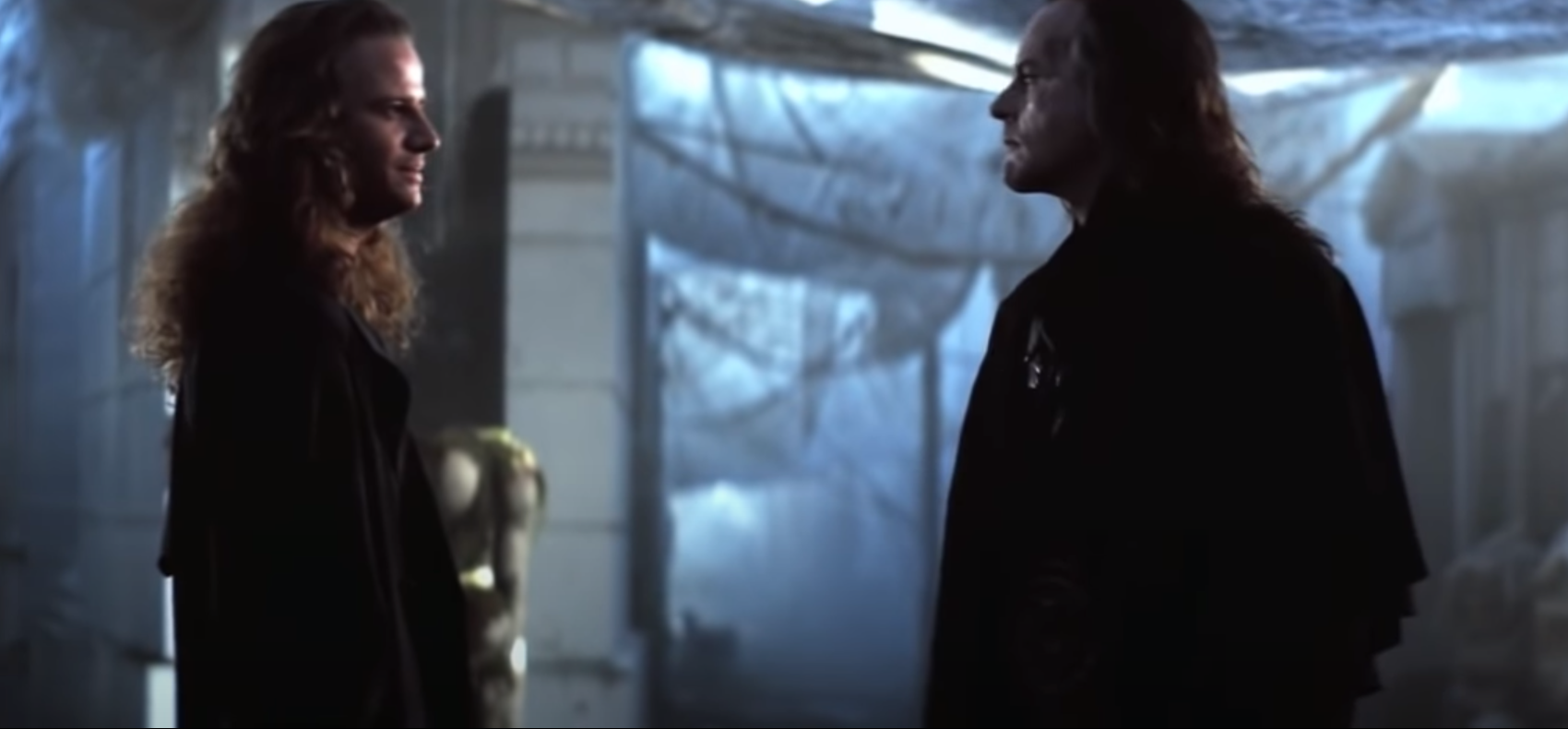
1986's box-office disappointment, Highlander, managed that tricky accomplishment of becoming a cult classic without even trying. With a great soundtrack by the ever dependable Michael Kamen accompanied by selected music from Queen, flashy direction by Russell Mulcahy and a game cast including Christopher Lambert (Frenchman playing a Scotsman), Sean Connery (Scotsman playing a Spaniard) and Clancy Brown (American playing a Russian), it has stood the test of time, 1980's fashion and all. Hell, we even get Celia Imrie, who managed not only to regularly co-star with the great Victoria Wood, but also continued a film/TV career that ensured she popped up in the strangest of places (the aforementioned Highlander, 1978's Death on the Nile, Star Wars Episode 1: The Phantom Menace and Taggart - that's some versatility!).

Old man MacLeod (also, Vigo's brother!)

With money obviously being made, the decision was taken to follow up with a sequel, placing Mulcahy back in the director's chair. The original's producers were also on board but with a story co-developed by Brian Clemens, whose British TV career reads like a who's who of genre television of the 1960's and 70's. Filming was to take place in Argentina and Lambert returned as Connor MacLeod. Returning too was Sean Connery, which was a surprise to many as he definitely (SPOILER ALERT) lost his head in the first film. Rounding out the main cast were the ever toothsome Virginia Madsen, familiar genre actor Michael Ironside and John C McGinley. 

This is probably one of the best bits...

Plot-wise, this was the film's first fatal mistake. They ret-conned a shit ton of backstory here, neatly destroying the set up from the first film. MacLeod and the other immortals are now aliens from the planet Zeist, and end up on Earth after being banished from their home planet for insurrection. Confused? Hold on to your britches, it's gonna get worse. You see, the Ozone layer, damaged to destruction by pollution, was replaced by a giant electromagnetic shield in 1999 to prevent dangerous UV-rays from killing everyone (co-designed by MacLeod). Said shield is ran by the The Shield Corporation and as with most film corporations, it's bad one. 

Acting, darling!

It's now 2024 and the Earth is a dark, depressing place where people just get by but society is crumbling and a lot of the blame is put on the existence of the Shield. Imagine, if you will, a gloomy village pub on a Sunday afternoon in November and you're kind of there. A terrorist group (led by Louise Marcus, the toothsome Miss Madsen) discover that the Ozone layer has regenerated and the Shield is no longer required. That's one part of the plot. The other is the conflict between MacLeod and General Katana (Ironside). The latter wants the former dead and even though MacLeod, as the last Immortal on Earth, is now an old man, Katana has become impatient and wants him dead now. Which is the present. Not the past where Katana is and where MacLeod came from. So how someone from the past waits for someone in the future to die of old age is beyond me. But hey, story! Katana sends two goons to kill MacLeod but, as they are also Immortals on Earth, when he kills them, he reverts back to his youth via the Quickening. Why that age? No idea. At the same time, MacLeod calls out for Ramirez's help because they are linked even unto death (naturally), so Ramirez appears at Glencoe by magic (literally) and goes off to find MacLeod. At the same time, Marcus confronts MacLeod, witnesses the fight between him and the goons, then just takes on board the fact that MacLeod is a centuries old Immortal. Phew! Needless to say, the good guys win, the bad guys lose and everyone (who survives) is home for tea and tiffin (NOT that tiffin... well, actually...) as the final credits roll.

Young man MacLeod with better hair than Ms Madsen

So is this film really that bad???

This bad... and worse!

Fuck yes!

It's a pile of non-sensical bull hooks that is a waste of 100 minutes of your valuable time. The fact that it is on YouTube and has not been taken down says a lot. Not even the copyright holders want this any more. Why, you may ask? Okay, here goes...

The plot is nuts, full of holes and destroys whatever legacy the first film created. That the sequel is ignored by future franchise instalments says it all. But it's not just the alien thing, the time travel aspect (which exists for no reason whatsoever - they can just be on another planet) or the science behind the Shield. It's literally every action in the film that makes no sense or has much in the way of consequence. They are, in the order they appear in the film:

  • The beginning, a text dump to explain Earth in 2024, followed by a ten minute mix of MacLeod watching Wagner whilst remembering his past, alien life, where the insurrection against General Katana fails. It's long and quite boring. Also, the insurrection failed and I think I know why. If you have guns, maybe try shooting the bad guys whilst they are 100 yards away rather than get into melee combat where the guy you are pratting about with holding a sword has a bunch of mates trying to do you in. I mean, if you have firearms, surely you know that killing from a distance is a much better alternative???
  • Katana's motivation - he's waited five hundred years, a few more weeks won't kill him (as age will kill MacLeod), but no, off go the goons and justify the film lasting longer than 20 minutes. Shame that.
  • Ramirez's return. How? Magic. No, seriously, how??? Magic, (and Lambert wanting to work with Connery again), now shut up! And that whole makeover scene in the clothing store - they suit and boot him, ply him with whiskey and cigars and get him a limo to the airport all off the back of one pearl ear-ring. I did not know that clothing store managers were closet jewellers, but hey, this is going to get worse so let the silliness continue. 
  • Ramirez travelling on a plane to another country with no passport. Okay, the inflight safety video is mildly humourous and alongside the TV advert that appears a tad earlier, seems to be aiming at the Robocop level of pastiche but the tone totally conflicts with the actual movie, whereas Robocop did it brilliantly. I mean, I wouldn't buy Highlander II for a dollar!
  • MacLeod vs the goons - overly long, lots of wire work and whilst you can see what they did with the set design, it's also too dark. There is little regards to physics - watch the way they turn in flight, and let us not forget the first Quickening of the movie. MacLeod removes the head of one goon and there is an electric spidery thing, lots of pyrotechnics and some rather dodgy model work. Things blow up, buildings are wrecked, yet literally in the next fight scene in the same location, there is no damage.
  • After that fight, MacLeod and Marcus get horny and make the beast with two backs in an alley. Why? No idea. 
  • Katana arrives on Earth, landing in a subway train which he then commandeers, taking it from 40 on the speedo to over 600, causing passenger to fly to the back of each carriage (Why? How?), with a tame-ish amount of gore and prosthetics. The subway train, ignoring any connection to the real world, manages to not only stay on the track at 600 whatever but survives intact after crashing though a wall. Must have been the cheap sparklers hanging off the front that saved it. Katana, being a nutter, is unharmed by this. 
  • The plan to take down the Shield - MacLeod and Ramirez drive a car into the control facility and get shot to shit. Marcus, in the boot (sorry, trunk), is untouched by the 360 degree gunfire that you clearly see peppers the car and has no problem going through the car doors and windscreen. Obviously, a toothsome smile will do wonders. Also, Ramirez uses life force magic to get them out of a no-escape situation. Life force magic that literally exists for this scene and this scene only - a bit like Sean and his request for a ping. One ping only... Still, a worthy sacrifice and one that gets us the "no-one asked for this" bagpipe rendition of Amazing Grace. It could only get more Scottish if they had Rab C knock on the door offering them a Tunnock's teacake and a can of Tennents!
Yes, the film is nonsense. It is also dark, as in visibly dark. Put that down to the Shield, but it also hides a multitude of budget sins and at least gives it a visual style that befits a soulless experience. The actors, though, seem to be having a ball. Lambert is good as MacLeod, successfully managing an old man impersonation (the make up is slightly off though) and feeling quite at home as his younger self. Madsen is toothsome and gives the film a bit of light, whilst Connery looks like he's having fun in the way that a hefty pay packet will make any job seem enjoyable. Ironside is in full panto mode though, and at times you expect him to rock up as a Dame, that's how OTT he is here. Not that this is a bad thing, and if you've followed Ironside's career, you'll know that he gives every job maximum effort, so I applaud his acting decisions here. McGinley, however, is wasted - coming across as slightly effete but trying to be menacing at the same time - the tone is definitely off and I know he can do much better. That being said, it has been admitted that by the time they started filming, the cast knew the script was crap so just went for the moolah (and contractual reasons). Can't say I blame them. 

This is a subway train doing 600 plus whatever... and sparklers!

The fight scenes, surely a basic essential when it comes to having people run around with ruddy great swords, are slow and quite basic. Maybe it's the direction, maybe it's the preparation of the cast, but in every sense, you get the feeling the local am-dram group could do better. Same can be said of props - this is another film that has re-purposed motorcycle helmets for guards to wear. Never, ever use motorcycles helmets like this. Same with films set in space. Just NO!!!!

Transparent computer screens - that's Pornhub knackered then...

The film is dripping in 1990's fashion, especially the suits, and as for the hair, well... Look, I get it, men with long hair were a popular fashion thing 30 years ago, and no, this is not just me as my hairline retreats. The worst offender is Ironside's hair piece, he just looks silly, and if this is how 2024 should look, then count me out. 

The battle of the wigs - there can be only one!

Highlander II: The Quickening is a terrible film, of that, there is no doubt. Not even working in the titles of Queen songs into the dialogue helps matters. In fact, anything tying this film to its predecessor just highlights how good that one was compared to this one. The plot is trash, it looks cheap and despite the best efforts of the cast, the dialogue and character actions are ludicrous. This film was rightly a box office bomb and although you can justifiably say the Highlander franchise was never grade A entertainment, it never again sunk to the depths of this sequel. That being said, Highlander III was also dire, just not as bad as this. To see how bad things really were for this film though, check out the IMDB trivia page for it here. It's an eye opener.

Getting your knackers crushed probably seemed like a more enjoyable experience to Mr McGinley than watching this film.

For a final comment on Highlander II, as one reviewer put it when this film came out, "There should have been only one!"