Showing posts with label Archive magazine. Show all posts

Friday, 20 May 2022

Archive Magazine - Volume 25.6 Review

Last week, an email arrived from Archive Magazine editor Gavin Smith containing a link to a digital copy of the latest issue, 25.6. It was a pleasant surprise to see such a copy being sent out to subscribers of the physical magazine a few days before that arrived in the post and, as it is the Wakefield (but in Bradford) RISC OS show this weekend (which I hope to attend), I thought it timely to provide a quick review of the final edition in the current volume.

There are the usual 56 pages (including covers) and it begins with a lovely picture from Tollymore Forest Park in County Down. After a brief but informative editorial, we hit the rather lengthy newsdesk, coming in at eight pages. There are notes on forthcoming shows, a new machine from R-Comp, various software updates and the like. Indeed, there is quite a lot to take in here. 

The first feature is from Richard Hallas and covers the use of the cog logo to represent RISC OS. It's an interesting piece, not only providing a bit of background to the use of the Acorn nut in previous years, but also the reasons and benefits of changing to the increasingly familiar cog. Following that is an update from Bernard Boase to a previous article (Archive 25.3) about the various distros available for RISC OS. Here, he provides further information about the Cloverleaf Distro and some thoughts on it.  

John McCartney gives us a article on running RPCEmu on Linux Mint, as well as a link to his guide to the process, followed by four pages from Andrew Rawnsley, who provides a beginners guide to what RISC OS Developments do, their past achievements and how they operate. Chris Hall made my head explode with four pages on how to calculate the filled area of an arbitrary shape - this has nothing to do with his writing or coding, it's very much to do with my brain and maths! Once I got my head around the workings it all made perfect sense. 

Brain hurts... :-)

Gavin Wraith talks readers through queues and objects in Lua, John Schild delivers an amusing tale about printer drivers, and then Mr Wraith pops up again with two tales about text. Chris Hall's hefty five and a half pages on the steady march of progress relating to data connections from your home is one that certainly informs and gets the reader to ask questions - the most immediate one being "Is that really progress?" 

Bimal Jangra delivers some good advice on keeping your Windows PC's up to date in PC Bits, whilst in Mac Matters, Mark Stephens delves into using RPCEmu on the Mac. We get a half page for letters and emails (and yes, I remember TopModel too!), before Rob Sprowson starts a new series on the topic of PIC's - Peripheral Interface Controllers. It looks like there will be four parts to this series and I am looking forward to seeing where this goes. 

Colin Piggot returns with another Acorn Retro, with news snippets and the like for BBC Micro and Electron users, before we finish the issue off with Kevin Corney's Lives and Loves of a RO fanatic, a lovely appreciation of one person's interaction with RISC OS. Add to that a couple of small hints and tips box outs and an advert for the Wakefield show this weekend on the back cover, and that's it for a packed final edition for this volume. 

I really do like Archive, it's never less than informative and entertaining, even if the subject matter taxes the brain (which is no bad thing at all), and it's great to see the updated magazine website in operation. As you can probably have guessed, I renewed my subscription at the end last year and look forward to seeing what the next volume brings. Check Archive Magazine's website out here, where you'll find all of the relevant details about subscribing. You can also follow the magazine on Twitter here

Saturday, 20 November 2021

Archive Magazine - Volume 25.5 Review

Arriving fairly shortly after volume 25.4, 25.5 is the penultimate edition for the year and a bit of a news-packed issue, having been printed just before the London show which took place on the 30th of October. Also included in the magazine was an A5 flier to remind me my subscription was due to expire after the next issue (25.6) and listing the ways of renewing the subscription. So, what do we get for this issue?

The Newsdesk occupies its usual place, reporting on Cloverleaf's new Filer, the new Cloverleaf distro that was promised as part of their Kickstarter campaign, and the announcement of two RISC OS shows for 2022 - the Wakefield show (23rd April, which I am hoping to attend) and the RISC OS eXperience show (14th May) in the Netherlands. The Haunted Tower Hotel is the latest release from AMCOG Games, there is an extended edition of Acorn: A World in Pixels (already ordered that one) and a new WIMP programming book from Chris Dewhurst. There is more but you get the idea. And that doesn't include the actual London show announcements either!

The first article is a cracking piece by Jeroen Vermeulen on porting Python games into BBC Basic. Very much a "how to" and packed with detail and tips, this will be a boon for anyone with similar plans and you'd do well to have this six page resource to hand if that kind of project takes your fancy. Andy Marks reviews DeskWatcher, an application to remotely control one RISC OS desktop from another, highlighting features such as screen recording, file sharing, multiple connections and the like. It's a good review and is very honest about the benefits, limitations and foibles of the software.

Meet ArmBob is a great introduction to Bob, an interpreted language for object-orientated programming if that is your sort of thing. I found it interesting. "What? Me a programmer?" is a humourous look at an old utility being revisited by someone who is adamant they are not a programmer. Uh-huh :-)

Also included is a guide to updating NetSurf, adding a reset switch to a 4te desktop and a handy step by step process of getting Gmail to play nicely with Pluto and Hermes. The second part of the USB Audio series is as interesting as the first (as in highly) and there are three entries in the letters page. PC Bits focuses on the joy(!?) that is the Windows Blue Screen of Death and a quick comment as to why the author hasn't upgraded to Windows 11 yet, whilst Mac Matters add a note on sharing Mac screens on RISC OS and file mapping. Code Burp takes a look at image saturation, and Acorn Retro is its usual fun smorgasbord of 8-bit gaming wonder.

That is still not all in this issue, with a full page advert from Cloverleaf about their new RISC OS Distro and the now regular half-page from RISCOSbits with their London show offers on the FOURtress range of desktops. Speaking of which, the London show news...

What a show for announcements it was! Considering the size of the RISC OS market, it is extremely heartening to see about multiple pages given over to the show news. RISC OS Developments gets 4/5th of a page (web browser Iris, new TCP/IP stack for wider testing and Pinboard 2.0), RISCOSbits gets a full page (new LapDock option for single board computer users, Mini ITX board), R-Comp gets 3/4th of a page (Pi400 Plus kit, software updates for Messenger Pro and Fireworkz Pro) and finally RISC OS Open with a 2/5th of a page (updated DDE and new pdf version of the RISC OS 5 User Guide). It is really pleasing to see such a level of commercial activity.

Finally, the editor concludes his two-parter on the future of Archive, with a note on making the magazine more visually appealing and updating the website. Both initiatives are worthy and I look forward to seeing how they develop. 

What is clear from this issue of Archive is that there is a real sense pf positivity about the RISC OS user base and the magazine itself. There are promising developments ahoy and I would certainly like to see the magazine grow in size (and readership) if at all possible. I have no horse in the race between the different bindings and am happy to see the presentation evolve whichever way is chosen. As it stands, if you're a RISC OS user then Archive magazine remains an essential purchase and I will be certainly be renewing my subscription before volume 25.6 hits the doormat. That also reminds me, the Archive Archived DVD/USB Stick is due in early December. That's something I'll definitely be picking up.

You can find out more about this excellent magazine by visiting archivemag.co.uk. You can also follow the magazine on Twitter.

Friday, 8 October 2021

Archive Magazine - Volume 25.4 Review

It's been a while since Archive 25.3 landed and I was waiting with much anticipation for the next issue to arrive. Happily, it did so in the middle of last week so, having written little about my favourite non-mainstream OS for a while, thought it worth giving the latest issue a review.


Well packaged as usual, the first thing you notice is the rather lovely photograph of a sunset that occupies the cover alongside the contents page. As you can see from the image above, there is a lot in the latest issue which is well worth reading. The range and breadth of contributions really do make this a fantastic example of a user-generated publication and one that is great at informing, educating and entertaining the reader. Hmmm, that has a certain ring to it. 

The article on graphical coding with Python is well worth your time if you're getting to grips with this language in RISC OS, the introduction to UCDebug is a good intro into debugging tools, and the Bookmarks piece has links to three very interesting dev videos. Andy Marks (of RISCOSbits fame) demonstrates three different virtual desktop apps, USB audio gets an informative piece and there is even a small letters page. The regular sections are also up to their usual high standard.

However, there are a couple of articles I do want to comment on, as well as the future plans the editor has revealed. 

Firstly, the brace of hardware pieces. There's one on the TiX Duet from RISC OS Computers and then a comparison review between the FOURtress from RISCOSbits and the 4te from RISC OS Computers. It's especially heartening to see two budget machines in the RISC OS market that can cater for both new and existing users as well as a more bespoke machine that offers maximum flexibility. 


The Duet (you'll need to scroll down that page) is a truly niche machine, a combination of a Titanium board and the PC motherboard of your choice. You decide the spec and the price, but the end result is one that can provide a RISC OS and Windows system in one desktop. This is not a machine for everyone, but that it exists is a good thing. It offers flexibility and freedom, as well as a simple space saving solution for those who don't have acres for a computer set up. The piece on the Duet in Archive does a very good job of explaining how the system works and its benefits, as well as detailing the process of actually obtaining one. Very interesting and highly informative.

The comparison review between the FOURtress and the 4te was of equal, if not greater, interest to me as these computers occupy the lower end of the RISC OS hardware market. Short of building your own desktop using a Raspberry Pi and suitable case, these are two of the simplest and most straight forward ways of getting your hands on a RISC OS system. The piece includes a benchmarks table, price breakdowns, and pros and cons of each system. In a sense, neither is "better" than the other - they both meet the same market requirement but from different companies. I don't "need" a new RISC OS machine at the moment, though I do "want" one (damn my adult sensibilities!) and either machine would fit the bill. What was great to see were the screenshots of the supplied software, something that neither company seems to list on their websites. Knowing what ships with the machine could make it easier for potential buyers to decide upon a purchase. As it stands, either machine will get you started out of the box, though there are add-on packs for (various unlisted) commercial software and AMCOG games from RISCOSbits. The 4te website has a section set aside for software but that's currently empty. 

Kudos then for having the review piece for each machine. I do hope there will be a Pinebok (formerly known as Armbok) review because if the hardware is still available, I would like to see how it works as a RISC OS machine. Yep, still hankering after a portable RISC OS computer... 

Also of note in this issue are the thoughts and plans of Gavin, the editor. You'll find these starting on page 36 and I do like where he wants to take the magazine. The two points he discusses in this issue are the change in software used to produce the mag (although still keeping it RISC OS based) and a planned increase in size. He notes that he had three more articles that could have been included in this issue so wants to move away from the stapled format (which limits the page count to 56) and move to a bound format, thus permitting an increase in page count. This is great news and shows that even though RISC OS remains a relatively niche operating system, it still has a vibrant user base. Couple that with readily available hardware and "good-to-go" software bundles, and it feels to me that there is a great deal of life in RISC OS yet. There are two more ideas on the way, alongside a survey, to be announced in the next issue.

All in all, Archive remains a great magazine and one that any RISC OS user will benefit from reading. It's also extremely promising that improvements and expansion are planned. I know I will be re-subscribing when the time comes.

Check out the Archive magazine website here if you'd like to know more about this essential RISC OS-based publication. 

Friday, 30 April 2021

New arrivals and some thoughts.

Last week saw a couple of parcels drop through the letter box as well as the latest issue of Archive magazine. Alongside those, the tail end of the week also saw a noteworthy news announcement from Evercade and the Wakefield Show for fans of RISC OS took place on Saturday.

Evercade Cartridges and new hardware announcement

The new cartridges first and we have No.15: Jaleco Collection 1 and No.16: Piko Collection 2. Containing 10 and 13 games respectively, there are nice additions to the range and cover 8, 16 and 32-bit software releases. My current favourites in the Jaleco Collection 1 are Earth Defense Force and Bases Loaded, whilst in the Piko Collection 2, Top Race 2 and Soccer Kid have seen the most play time so far. There was a nice mini-poster included in the former collection and some stickers in the latter. I have more carts on order: No.17: Indie Heroes Collection and No18: Worms Collection 1 (both due by the end of May), and there are even more releases due out later in the year: Codemasters Collection, Mega Cat Studios Collection 2 and the Intellivision Collection. According to their own 2021 timeline, Evercade have five more releases due for announcement before the end of the year, so it would be fair to say that they are doing well with the handheld. But that is not all...


On the 23rd of April, Evercade announced the Evercade VS, a mini-console that plugs into your TV via HDMI, has four controller ports and accepts two carts at a time. Funky feature, that one, but it does mean you can have up to 40 titles ready to play without touching the base unit. Following the NES in its styling (that flip up cover is a nice touch), you can also connect other USB controllers as well as wireless dongles to give further controller options. With built-in Wifi for over the air updates and including a controller with a 3m cable, it looks like they have pretty much thought of everything with this addition to the Evercade range. Pricing isn't bad either, £89.99 ($99.99/€99.99) will get you the base machine, though from what I have read, you don't get a power brick or an HDMI cable in the box. Then again, it's not uncommon to have spare cables lying around and to be honest, the last thing my house needs is yet another micro-USB cable and power adaptor. The base pack will get you one cart collection in the box, though they have not announced which one yet and I sincerely hope it's a new release. That way, existing Evercade users won't be duplicating carts if they buy a VS, and if they don't go for the new console, they will still be able to buy the cart separately. One slight issue at the moment is that neither Namco Collections (No.2 and 6) will work with the VS due to licensing issues. That may, however, be sorted by the time the console launches.


As it stands, this is a maybe purchase for me. The price is cheap enough and the Evercade handheld gets a fair bit of use as it is. Ironically, the multiplayer part of the equation isn't the key selling point for me, though I am sure my good lady will kick my backside in quite a few of the titles supporting multiplayer. No, the biggest draw here is the easy connection to a big screen, something that is possible using the handheld but never feels quite right. If I do order this one, it's going to be a busy couple of months later this year, as hopefully I'll receive my Intellivision Amico in early October. Whilst I know that's been getting some stick for delays, the level of communication from the company has never let up, which is promising. It's certainly better than silence as that always puts me off a product that is vying for my pennies and something that has veered me away from supporting the now-released (but not exactly storming it) Atari VCS. That being said, buying one of those if you live in the UK seems nigh on impossible at the moment and that $399 price point is more than a tad off-putting. 


Archive Magazine and the Wakefield Show

Archive magazine 25.3 landed on Saturday and it was quite timely, watching as I was the livestream from the virtual Wakefield Show on YouTube. The latest issue is another packed edition and I particularly liked the final part of the ARMs and Architecture series (focusing on memory) and the now semi-regular column Acorn Retro by Colin Piggot of SAM Revival magazine fame. Incidentally, I have pre-ordered issue 26 of SAM Revival which appears to be getting closer to release. As for Archive mag, some interesting figures were released by Gavin over the weekend: a print run of 500 copies and subscribers in 18 countries. That's bloody impressive! The quality demonstrated in the latest issue bodes well for the future.


On to the Wakefield show and I've had thoughts about visiting this for a couple of years now. Due to COVID, this hasn't happened yet and this was the second year where the show was held virtually via an invite-only Zoom meeting and live streams via YouTube and Facebook. You can check out the Wakefield Show website here for the links to the streams. I dipped in and out of the YouTube feed throughout the day and quite enjoyed the updates provided by the various companies attending.

On the whole, this was informative and worth watching, with plenty of new products and updates to existing hardware and software demonstrating that there is still very much an active community around the OS. AMCOG Games started the show and displayed a range of games for RISC OS. The new range of Pi4-based desktops from RISCOSbits and the existing 4te from R-Comp looked quite tasty, as did the updated Ro from CJE Micros. What is interesting to see is that both R-Comp and RISCOSbits now include a hefty amount of pack-in software. Anything to help the new user in getting some benefit out of their new purchase is always good. There was even a half hour from Cloverleaf about their second attempt at a Kickstater campaign... which although it is stated on the Wakefield Show website that the campaign would have started by the time of the 30 minute presentation was due, as at the time of posting this (six days later), it still hasn't launched. I am feeling more ambivalent about this as time goes on. Still, I'll be giving their offering a gander when it's launched. From the presentation last Saturday, there appears to be more focus and detail on what the funding is to go towards and the idea of a €499 RISC OS laptop is tempting.

All in all, this was a positive show. Some good hardware plans, plenty of software to suit a variety of needs and a very forward looking approach to the future of the OS (it is reassuring to see that there is serious discussion abound as to how to deal with the changes to the ARM architecture). What can be taken away from the Wakefield Show is a sense of optimism and, more importantly, realism. The platform is alive and well, there are plans to try and expand the userbase and there is evidence of further international interest in the platform. These are all good things and, as I have said before, give RISC OS a go, you might like it. Just remember its limitations, manage your expectations and you may find something you'll like.

Friday, 5 March 2021

Archive Magazine 25.2 Review

A little later than expected, Archive Volume 25.2 arrived this week and it turned out to be well worth the wait. With the usual high print quality, this issue is packed with articles, features, hints and tips.

A lovely winter scene graces the cover, leading to a hefty 6 pages worth of Newsdesk. It cannot be overstated how much this is a great thing, demonstrating as it does the continued vitality of the RISC OS market. This also including two new desktop machines: the 4te from R-Comp Interactive and the FOURtress from RISCOSbits.

We have a three and half page review of the Raspberry Pi 400 which, although not targeting the RISC OS market directly, is more than suitable as the basis of a cheap RISC OS machine if you take into account its limitations. This review does and it's very much a warts and all look at the device. This is to be applauded and certainly makes an informed decision on whether to purchase a Pi 400 much easier. Having seen a few YouTube videos on the Pi 400, I'm certainly interested in one for both RISC OS and Amiga OS purposes (it's just a matter of SD cards) so I, for one, am very grateful for the review, Mr Marks. Check out the Pi 400 official website here, where you can also find links about buying one. Starting at around £67 for the computer itself, it's cheap and cheerful, whilst the full kit including manual, cables and power supply can be found for under £94. 

Back to the magazine, and we have part two of the series on Python 3 for RISC OS, giving an update on developments and future plans, as well as the ubiquitous "Hello World" program. Well, you've got to keep the tradition going, haven't you?

The second part of ARMs and Architecture gets six pages and builds on superbly from the first instalment, providing further details on how processors operate and how this relates to the ARM architecture. There is a two page article on using RiscLua for genealogy purposes, and the first part of a series on the RISC OS sound system and efforts to improve it, beginning with a five page starter this issue and is another great introduction on a subject that may not be familiar to some. There is a single page on key re-mapping, and eight pages on how to draw a map of the London underground using the !Draw format. Intriguing and quite a fun read - though I am a bit of a nut about maps so seeing the process of creating one was cool.

There's a three and a bit page piece on networking the email client Pluto - this was a new topic for me and came across as a very handy guide. I don't think I'll ever have a set up to use that info but good to know it's out there, with a short summary of the available email clients for RISC OS (including the aforementioned Pluto) following. Acorn Retro is a lovely article on the subject of retro gaming with the BBC Micro from a gentleman well known for his love of another long gone (but not forgotten) computer, the SAM Coupe. That was a machine I really wanted back in the day, as my Dad had brought home a brochure from a (long gone) computer shop in Consett. That never worked out and a couple of years later, I managed to acquire an Amiga 500, but I do have a love of old 8-bit computers and if you want to know more about the modern day support for this machine, head over to SAMCoupe.com. They have their own magazine, SAM Revival, so I've ordered the most recent issue of that to see what it's like - expect a post in the near future. Code Burp 2 provides knowledge on changes between 26 bit and 32 bit programming, and the letters and emails section is a three page section, with some nice comments and suggestions for the editor - it's good to see such a healthy forum. 

There is an introduction to Prophet, a business management package for RISC OS, followed by the Yellow Pages, a brief code section for readers to try out, then the regular Mac Matters column, this time looking at the latest port of the RPCEmu emulator for macOS. Interspacing the articles are snippets of hints and tips, This issue ends with a "Next Issue" box out and an advert from RISCOSbits. 

This is Gavin's second issue as Editor and it has maintained, nay improved, on the quality of the first. There is something here for all levels of knowledge and experience. Yes, I know I am repeating myself from the review of Archive 25.1, but this really is an essential purchase for any RISC OS user and well worth a read for those with even a casual interest in the platform. Visit the Archive website here for more details about the magazine and subscriptions.

Wednesday, 18 November 2020

Archive Magazine 25.1 Review (plus a little extra RISC OS reading)

Print magazines were once the lifeblood of computing fans of any platform. Sadly, over the years, many of those titles, both mainstream and niche, have disappeared due to declining sales, decline of the actual platform and the rise of online publishing. Titles such as Personal Computer World, Amiga Format, Acorn User and even the illustrious Computer Shopper (last issue out now) have faded away. That's not to say niche platforms have been left bereft of physical publications. Indeed, the Amiga market has the long established Amiga Future and a new title, Amiga Addict, which has recently successfully reached a minimum order goal and should be in reader's hands around the middle of December (I'll have a review of that one when I receive my copy). The same holds for the RISC OS market and it must be said, there is something reassuring about a platform still having the following to support the printed word.


Launched in 1987, Archive now has its third editor after the passing of long-time RISC OS user and writer Jim Nagel. Gavin Smith has taken up the reins and after sampling a pdf of the final issue of Jim's tenure, I took the plunge and ordered a one year subscription. This covers six issues for the princely sum of £40 (including p&p) for UK subscribers. European readers pay £46, whilst the rest of the world pays £50. 

Since this was my first physical copy of Archive, I wasn't entirely sure what I'd be getting - after all, a pdf is just a pdf. What arrived was a 52-page A5 full colour booklet. The cover is sturdy and of high quality, as are the pages, and I definitely think I am getting good value as far as the physical quality goes.

Or course, a magazine stands or falls on its content, so what do we get in this issue?

The traditional news section, covering the new R-Comp computers, the RISCOSitory awards and a new update to ScummVM among other subjects, does the job it needs to before leading onto the bulk of the magazine, the articles.


There is a great piece on how the programming language Python 3 has made its way to RISC OS, followed by an update on the new cases available from RISCOSBits, and then a very readable first part of a series about ARM chips and their architecture. There is an update on RiscOSM and Recce, the first a package that uses OpenStreetMap so you can download and save copyright-free maps for annotation and the like, the latter an add on to add images from Google Street View. I'll be honest and admit I had not heard of these before but they sound useful so I'll keep these in mind. Next up is the tale of bringing the Raspberry Pi 4 and RISC OS together, a less than simple task given the hardware changes to the latest version of the Pi.

We also have an article on getting back into BBC BASIC programming which caught my attention, and a couple of regular columns: PC Bits and Mac Matters - both of which I found enlightening. Two more programming articles, Code Burp 1 and From gawk2Mawk, via Perl were interesting but kind of went over my head - definitely a reflection of my knowledge (or lack thereof) and not the articles themselves.

The back cover gives you notes on resources listed in the mag, details of the subscriptions available, and a Next Issue box where I saw something that piqued my attention: a comparison of the two available portable RISC OS computers - the Pi-Top 2 and the ARMbook. That I can't wait to read!

Are there any downsides to this publication? Well, there are a couple of formatting issues that, in reality, don't spoil the magazine, and the editor has already stated that there was very much a learning curve for this issue, given that it was his first, so there is no need to judge harshly here. Other than that, no, I can't see any negatives at all. The price per issue is decent (including that all important postage and packaging) given the nature of the publication, and the actual physical quality of the magazine is very good indeed. The quality of the writing is high and whilst some of the articles are more technically minded than others, that just creates a good balance for all experience levels of the readership. 

This is a great first issue for the new editor and I look forward to many more. If you are a user of RISC OS or just have an interest in the operating system, I heartily recommend checking Archive out. I know I'll be keeping each issue from now on in a safe place for future reference.

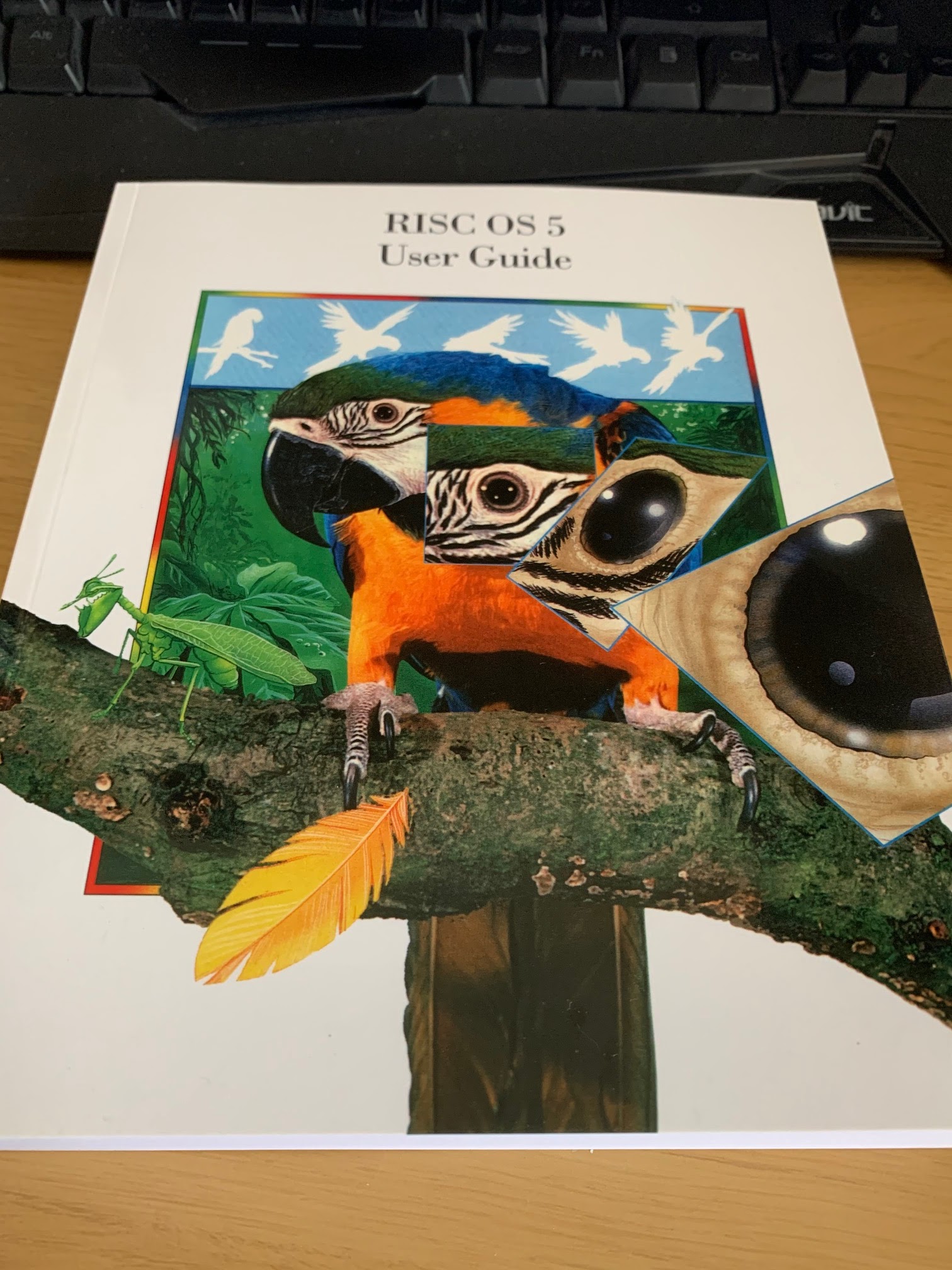
Oh, and a quick note about this, the RISC OS User Guide, covering the most recent version of the operating system, 5.28 (released in October this year). At nearly 600 pages, this is not a small tome but it covers all you would need to know about using RISC OS, the bundled applications and utilities and hardware set up for networks, printers and the like. It's well illustrated with screenshots where needed though not in colour. Having said that, it's only £20 plus £4.50 postage so I can't see a reason to complain. Another very welcome addition to the computing bookshelf.